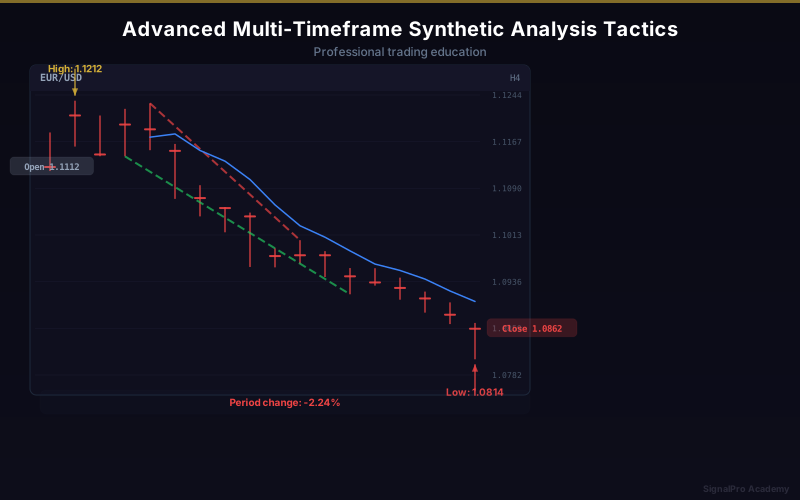
Advanced Multi-Timeframe Synthetic Analysis Tactics
Who This Lesson Is For
You should already be consistently breakeven on Multi-Timeframe Synthetic Analysis before applying these tactics. Advanced techniques amplify whatever your base behavior is — including bad habits. Master the basics first.
Smart-Money Concepts (SMC)
Multi-Timeframe Synthetic Analysis is heavily influenced by institutional positioning. Understanding what large players do gives you a structural edge:
- Liquidity sweeps: Price often pushes past obvious highs/lows to trigger stops, then reverses.
- Order blocks: Large institutional candles create zones where price often returns and reacts.
- Fair value gaps: Imbalances in price create magnetic levels.
Multi-Timeframe Confluence
A high-probability setup aligns across 3 timeframes:
- HTF (Daily/4H): Identifies overall direction.
- MTF (1H): Identifies the swing leg you'll trade.
- LTF (15m/5m): Provides the precision entry.
When all three agree, your edge multiplies.
Order Flow Reading
Modern traders use order book and time-and-sales data:
- Watch for absorption: large orders that don't move price much often signal exhaustion.
- Sudden volume spikes at key levels often indicate institutional interest.
- Iceberg orders (hidden liquidity) cluster at round numbers and prior swing points.
Session-Based Tactics
Multi-Timeframe Synthetic Analysis's behavior changes by session:
- Asian (Tokyo): Range-bound, mean-reversion friendly.
- London Open: Highest volatility — directional moves likely.
- London-NY Overlap: Largest moves of the day.
- NY Close: Position squaring, often counter-trend.
Execution Edges
Where you click matters:
- Use limit orders at confirmed structural zones — better fills, lower slippage.
- Avoid market orders during high-volatility news minutes.
- Split entries (50% on first signal, 50% on retest) to manage timing risk.
Position Scaling
Pros rarely enter "all in." A scaling plan:
- Initial 33% on first signal.
- Add 33% on confirmation pullback.
- Final 33% on continuation.
This averages your entry into a tighter risk profile.
Hedging Tactics
When uncertainty is high:
- Pair correlation hedges (long one, short a correlated).
- Options-based protection (puts as insurance, calls as upside).
- Reduce exposure rather than fight conviction.
Performance Tracking
Advanced traders track:
- Expectancy: (Win % × Avg Win) − (Loss % × Avg Loss)
- Profit factor: Gross profit ÷ Gross loss (target > 1.5)
- Sharpe ratio: Returns adjusted for volatility (target > 1.0)
Pro Mindset
Advanced trading is about systematic execution, not heroic predictions. The market will reward patience, planning and process — not bravado.
Edge is found in execution, not in finding the "secret" indicator. Refine your routine and your numbers will improve.
Lesson Discussion