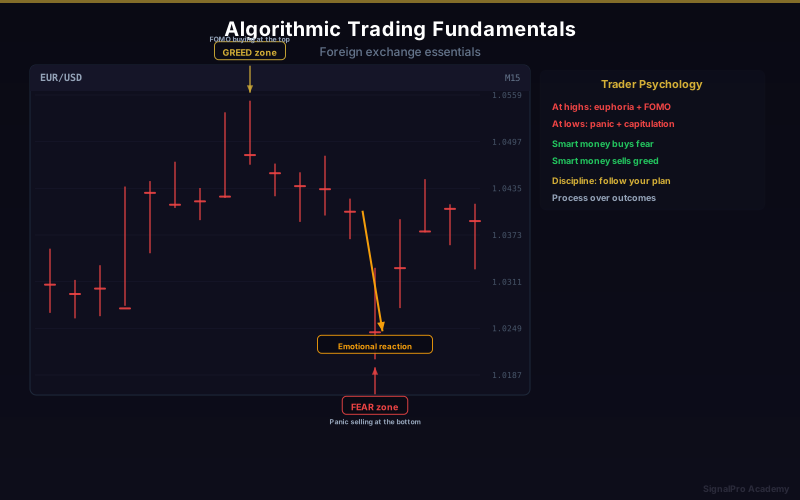
Algorithmic Trading Fundamentals
Algorithmic trading uses computer programs to execute trades based on predefined rules.
Why Automate?
Advantages
- No emotional interference
- 24/7 market monitoring
- Faster execution
- Consistent rule following
- Backtesting capability
Limitations
- Requires technical skills
- Needs ongoing maintenance
- Can fail during unusual conditions
- Past performance ≠ future results
Types of Trading Algorithms
Trend Following
- Moving average crossovers
- Breakout systems
- Momentum strategies
Mean Reversion
- Bollinger Band bounces
- RSI overbought/oversold
- Statistical arbitrage
Market Making
- Provide liquidity
- Profit from spread
- High frequency required
Building Your First Algorithm
Components Needed
- Data Feed: Real-time price data
- Strategy Logic: Entry/exit rules
- Risk Management: Position sizing, stops
- Execution: Order placement
- Monitoring: Performance tracking
Development Process
- Define strategy rules clearly
- Code the strategy
- Backtest on historical data
- Optimize parameters (carefully)
- Paper trade
- Live trade with small capital
- Scale up gradually
Common Pitfalls
Overfitting
- Too many parameters
- Works on historical but fails live
- Solution: Keep it simple, use out-of-sample testing
Curve Fitting
- Optimizing for past data
- Won't work in future
- Solution: Walk-forward analysis
Infrastructure
- VPS for 24/7 operation
- Reliable internet/power
- Broker API access
- Monitoring alerts
Lesson Discussion