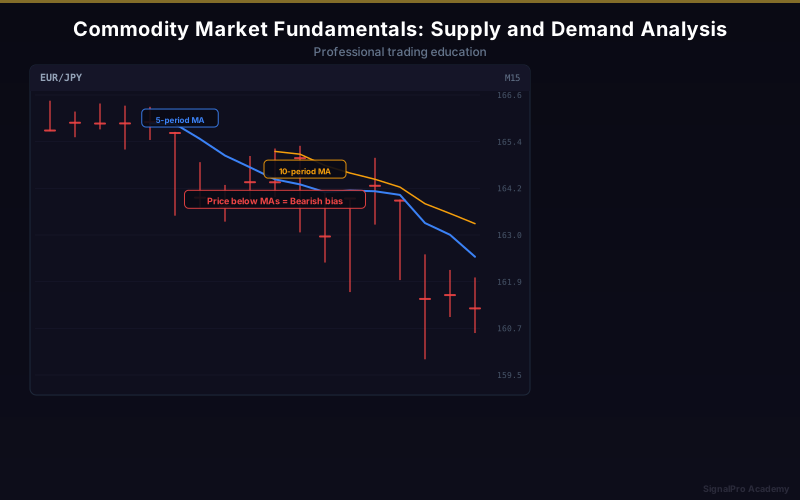
Commodity Market Fundamentals: Supply and Demand Analysis
Unlike stocks which can be valued on earnings, or currencies on interest rate differentials, commodity prices are ultimately driven by the physical balance between supply and demand.
The Supply-Demand Balance
Surplus
- Supply exceeds demand
- Inventories build
- Prices tend to fall
- Contango in futures curve
- Producers may reduce output
Deficit
- Demand exceeds supply
- Inventories draw down
- Prices tend to rise
- Backwardation in futures curve
- Consumers compete for scarce supply
Balance
- Supply approximately equals demand
- Inventories stable
- Prices range-bound
- Term structure relatively flat
Analyzing Supply
Production Data
- Monitor output from major producing countries
- Track mine production, well output, crop yields
- New capacity coming online (takes years to build)
- Production costs determine floor prices
Marginal Cost of Production
- The cost to produce the last unit needed to meet demand
- Price below marginal cost causes production cuts
- Price above marginal cost attracts new production
- This creates long-term mean reversion in commodity prices
Supply Disruptions
- Weather events (hurricanes, droughts, frost)
- Strikes and labor disputes
- Geopolitical conflicts in producing regions
- Regulatory changes (environmental, export restrictions)
- Infrastructure failures (pipelines, ports, railways)
Analyzing Demand
Consumption Data
- Industrial production indexes
- PMI data (manufacturing activity)
- Vehicle sales (for energy and metals)
- Construction starts (for metals and lumber)
- Population and income growth (for agricultural commodities)
Demand Elasticity
- Inelastic demand: Small price changes do not significantly alter consumption (oil, food staples)
- Elastic demand: Price-sensitive demand that adjusts with price changes (luxury goods, discretionary consumption)
- Inelastic commodities experience larger price swings
Substitution Effects
- At certain prices, consumers switch to alternatives
- Natural gas vs coal for electricity
- Platinum vs palladium for catalytic converters
- Corn ethanol vs petroleum
- Substitution creates price ceilings
Inventory Analysis
Why Inventories Matter
- Buffer between production and consumption
- Low inventories = price spikes on any supply disruption
- High inventories = price weakness, surplus storage costs
- Days of supply coverage is a key metric
Key Inventory Reports
- EIA Petroleum Status (weekly) for oil and gas
- LME Warehouse Stocks (daily) for metals
- USDA WASDE (monthly) for agricultural ending stocks
- World Gold Council (quarterly) for gold
Key Takeaways
- Commodity prices are fundamentally driven by physical supply and demand
- The marginal cost of production creates a long-term price floor
- Inventories are the critical variable connecting supply and demand
- Supply disruptions in concentrated markets cause the sharpest price moves
- Demand elasticity determines how much prices need to move to restore balance
Lesson Discussion