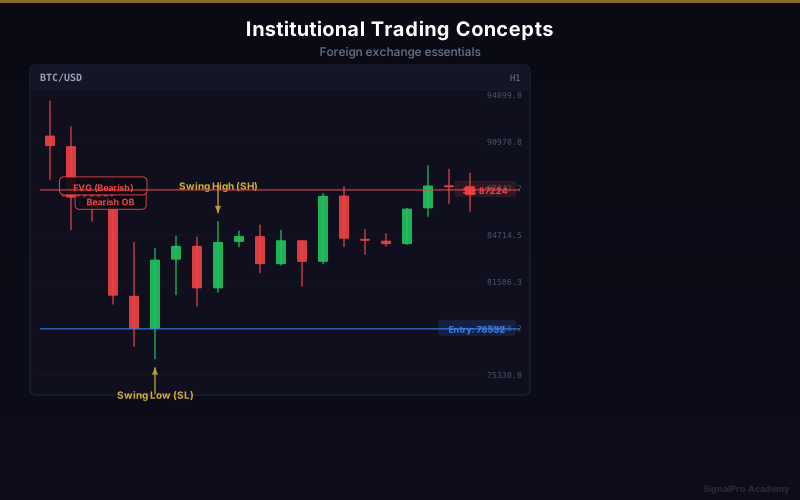
Institutional Trading Concepts
Understanding institutional behavior gives you an edge over retail traders.
Market Makers and Liquidity
What Institutions Need
- Large order execution
- Liquidity to enter/exit
- They can't buy/sell all at once
Liquidity Pools
Areas where retail traders place stops:
- Below swing lows (buy stops run)
- Above swing highs (sell stops run)
- Equal lows/highs (obvious levels)
Smart Money Concepts
Liquidity Grab/Stop Hunt
Price intentionally moves to trigger stops before reversing:
- Price breaks obvious level
- Retail enters or gets stopped out
- Smart money enters opposite direction
- Price reverses sharply
Accumulation and Distribution
Wyckoff Phases:- Accumulation: Smart money buying at lows
- Markup: Price rising
- Distribution: Smart money selling at highs
- Markdown: Price falling
Optimal Trade Entry (OTE)
- 61.8-78.6% Fibonacci zone
- Within an order block
- At a discount (for longs) or premium (for shorts)
Time-Based Analysis
Killzones
Times of day when institutions are most active:
- London Open: 8-10 AM GMT
- New York Open: 1-3 PM GMT
- London Close: 4-5 PM GMT
Asian Range
- Usually forms the daily range
- Breakout during London often defines direction
Practical Application
- Identify liquidity above/below current price
- Wait for liquidity grab
- Enter on reversal pattern
- Target opposite liquidity
Lesson Discussion