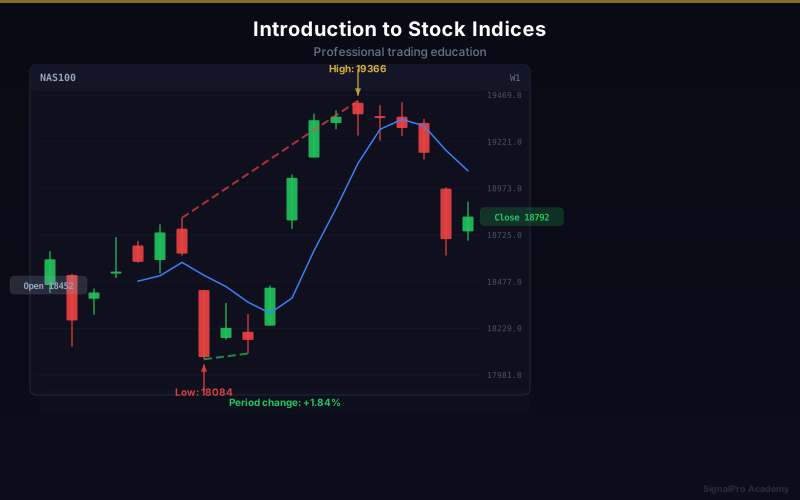
Introduction to Stock Indices
Stock indices are benchmarks that track the performance of groups of stocks.
What is an Index?
Definition
- Weighted average of selected stocks
- Measures market or sector performance
- Cannot buy an index directly
- Can buy ETFs that track indices
Major US Indices
S&P 500
- 500 largest US companies
- Market-cap weighted
- Most important benchmark
- Represents about 80% of US market
Dow Jones (DJIA)
- 30 blue-chip companies
- Price-weighted (unusual)
- Oldest major index (1896)
- Less representative but widely followed
NASDAQ Composite
- All NASDAQ-listed stocks
- Technology-heavy
- More volatile
- Growth-oriented
Russell 2000
- 2,000 small-cap stocks
- Economic indicator
- More domestic-focused
- Leads in early recovery
International Indices
FTSE 100
- Top 100 UK companies
- Financial and energy heavy
- London Stock Exchange
Nikkei 225
- 225 Japanese companies
- Tokyo Stock Exchange
- Price-weighted like Dow
DAX
- 40 German companies
- Export-oriented economy
- Frankfurt Exchange
How Indices are Calculated
Market-Cap Weighted
- Larger companies have more influence
- S&P 500, NASDAQ use this
- Apple matters more than smaller companies
Price Weighted
- Higher priced stocks have more influence
- DJIA uses this method
- Less representative
Equal Weighted
- Every stock counts equally
- Shows broader market health
- S&P 500 Equal Weight exists
Using Indices
- Check market direction before trading
- Compare your performance to benchmarks
- Use index ETFs for broad exposure
- Watch multiple indices for confirmation
- Divergence between indices signals rotation
Lesson Discussion