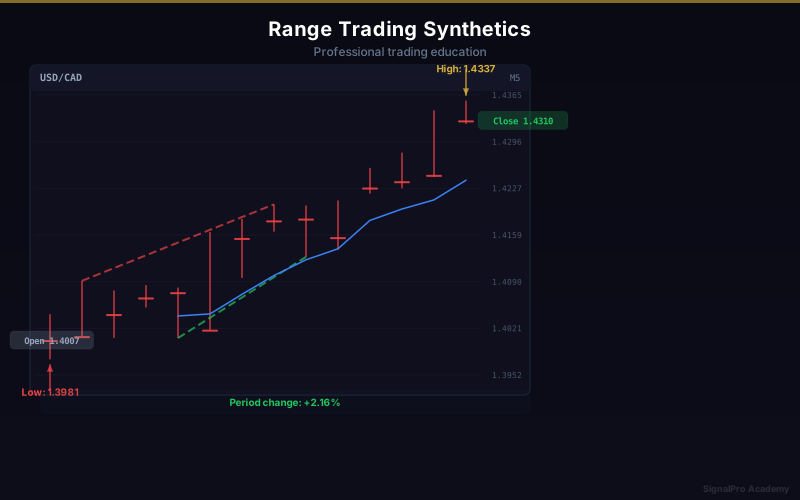
Range Trading Synthetics: Complete Strategy Guide
What This Strategy Does
Range Trading Synthetics is designed to capture moves in a specific market condition. Knowing when the condition is present — and when it isn't — is the heart of the strategy.
Best Market Conditions
- Clearly trending markets with healthy volume.
- Defined sessions with predictable volatility.
- Pairs/assets that respect technical levels (avoid randomly choppy instruments).
When NOT to Use It
- During major news releases unless the strategy is specifically news-based.
- In completely flat, low-volume conditions.
- When your account is in drawdown — wait until you've stabilized.
The Setup Checklist
Before entering, all of the following must be true:
- Bias is clear on the higher timeframe.
- Price is at a meaningful level (S/R, MA, swing point).
- A confirmation pattern has fully formed and closed.
- Risk-reward is at least 1:2.
- Risk per trade is within your daily limit.
Entry Trigger
Enter on the close of the confirmation candle, not on a wick or partial formation. Patience is what separates this strategy from random chasing.
Stop Loss
Just beyond the structural invalidation point — typically 1.5× ATR for the timeframe you're trading.
Take-Profit Logic
- TP1: Take 50% at 1:1 to remove risk.
- TP2: Trail with structure or a 21 EMA on the trade timeframe.
- Close fully if a counter-trend pattern forms.
Strategy Variants
- Conservative: Only trade once per day, only A+ setups.
- Standard: Up to 3 trades per session, B+ setups acceptable.
- Aggressive: Multiple trades, lower R:R targets — only with proven edge.
Backtest Requirements
Before going live, backtest at least:
- 100 historical setups.
- 3 different market regimes (trend, range, news-driven).
- Forward-test on a demo for 30 days.
Common Mistakes
- Skipping the bias step and entering counter-trend.
- Moving stops further away to avoid being stopped out.
- Adding to losing positions ("averaging in").
- Switching strategies after 5 losing trades — five is not a statistical sample.
Performance Expectations
Even strong strategies lose 35–50% of trades. Your edge is in the asymmetric reward — winners must average bigger than losers. If you maintain a 50% win rate at 1:2 R:R, you're profitable.
Run this strategy with discipline for 100 trades before judging it. Anything fewer is opinion, not evidence.
Lesson Discussion