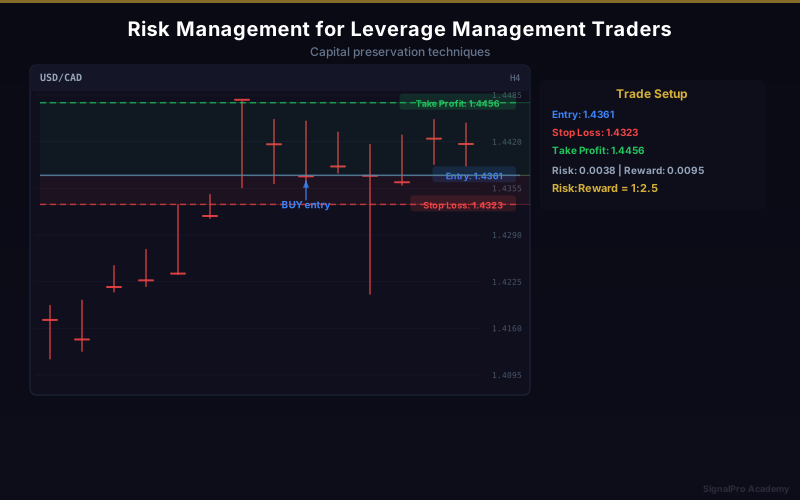
Risk Management for Leverage Management Traders
Why Risk Management Comes First
You can have the best entry strategy in the world and still blow your account if your risk per trade is wrong. Leverage Management can move violently — a single oversized loss can wipe out weeks of profit.
The 1% Rule
Risk no more than 1% of your account on any single Leverage Management trade. On a $1,000 account, that's $10 per trade. Boring? Yes. Account-saving? Absolutely.
Position Sizing Formula
Position Size = (Account Balance × Risk %) ÷ (Stop Loss in pips × Pip Value)
Example
- Account: $5,000
- Risk: 1% = $50
- Stop: 25 pips
- Pip value (standard EUR/USD on 1 lot): $10
- Position size: 50 / (25 × 10) = 0.2 lots
Stop-Loss Placement Rules for Leverage Management
- Always behind a meaningful structural level (swing high/low, support, resistance).
- Never inside the noise zone of recent wicks.
- Account for the spread — widen by the typical spread on Leverage Management.
Daily Loss Limits
Set a maximum daily loss of 3% of your account. Hit it? Walk away. Trying to "make it back" is the #1 way traders blow their accounts.
Weekly Loss Limits
Cap weekly losses at 6%. Two bad days do not mean the third must be a recovery day. Step back, review, return Monday.
Drawdown Recovery Math
Losing capital is not symmetrical:
- Lose 10% → need 11.1% to recover.
- Lose 25% → need 33.3% to recover.
- Lose 50% → need 100% to recover.
- Lose 75% → need 300% to recover.
This math alone should convince you to stay small.
Leverage Reality Check
Just because your broker offers 1:500 doesn't mean you should use it. Effective leverage on a Leverage Management trade should rarely exceed 10:1 for retail accounts.
Correlation Risk
If you're already long another correlated asset, taking a similar position on Leverage Management doubles your effective risk. Always check pair correlations before stacking trades.
Recovery Plan
After a 10% drawdown:
- Reduce position size by 50% until you recover the drawdown.
- Trade only A+ setups.
- Increase journaling depth — find what went wrong.
Pro Tip
Keep a separate "scratch account" for testing new strategies on Leverage Management. Never risk your main account on unproven ideas.
Survival is the only edge that compounds. Protect your capital first, then think about profit.
Lesson Discussion