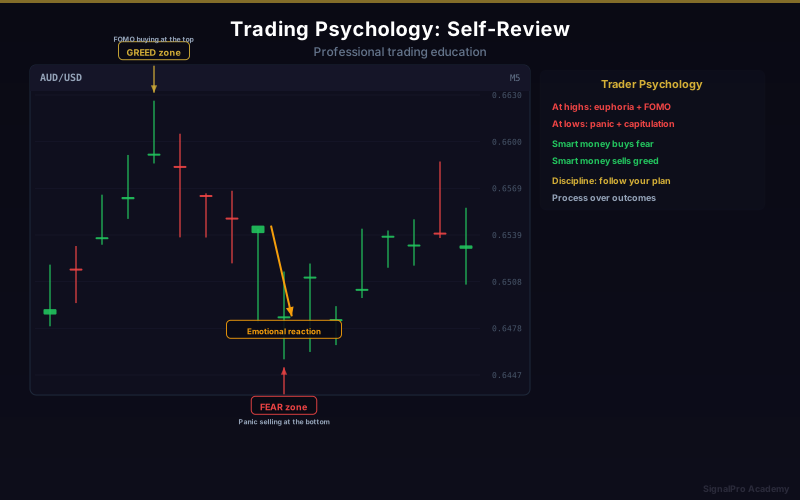
Self-Review: The Hidden Force Behind Most Trading Losses
Why This Matters
You can read every book on technical analysis and still lose money if you can't manage Self-Review. Most failed traders don't fail because they lack knowledge — they fail because they can't execute their own plan when emotions take over.
How It Shows Up
- Hesitating to enter a clear, planned setup.
- Closing winners early "just in case."
- Adding to losing positions hoping for a reversal.
- Revenge-trading after a loss to "make it back."
- Increasing position size after a winning streak.
The Real Cost
Even a small psychological leak can cost 5–10% of annual returns. Over a decade, that compounds into tens of thousands of dollars in missed gains.
Recognizing It in Real Time
Build a "tilt checklist" you scan every time you feel emotional:
- Heart rate rising? Step away.
- Watching the chart obsessively? Step away.
- Saying "I just need one good trade"? Step away.
- Considering doubling position size? Step away.
The 60-Second Reset
When you feel Self-Review kicking in:
- Take 5 deep breaths through your nose.
- Stand up and walk away from the screen for at least 60 seconds.
- Re-read your trading plan.
- Only return when you can trade your plan, not your feelings.
Daily Routine to Stay Mentally Strong
- Morning: 10 minutes of journaling before the session begins.
- Pre-trade: Run through your A+ checklist out loud.
- Mid-session: Take a 5-minute break every hour.
- End of session: Screenshot review of every trade with notes.
Weekly Review
Every Sunday, ask:
- Which trades did I take that violated my plan?
- Which good setups did I skip? Why?
- What single emotional pattern showed up most often?
Long-Term Habits
- Meditate 10 minutes per day.
- Sleep 7+ hours — your trading is only as sharp as your rest.
- Exercise 3+ times per week — physical health drives mental clarity.
- Limit caffeine during the trading session.
The Truth About Discipline
Discipline isn't a personality trait — it's a system. Build the system (checklists, journals, routines) and discipline becomes automatic.
The best traders aren't emotionless. They're better at recognizing emotion and not acting on it.
Lesson Discussion