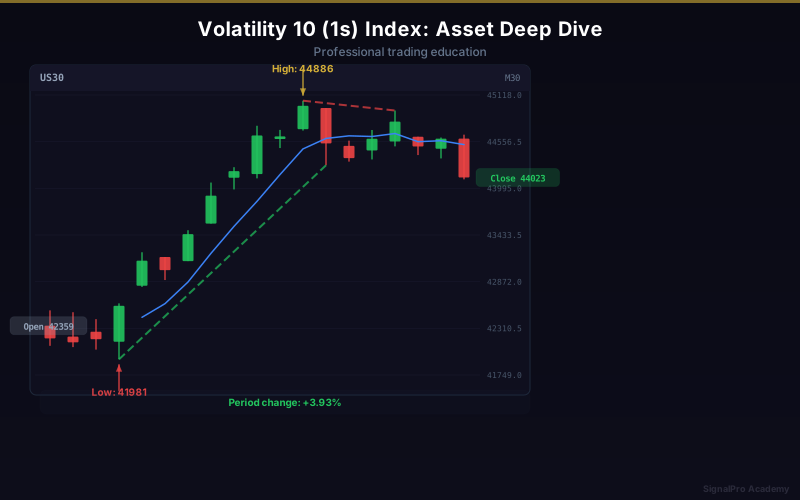
Volatility 10 (1s) Index: Asset Deep Dive
What Is Volatility 10 (1s) Index?
Volatility 10 (1s) Index is a tradable instrument with its own personality, drivers and behavior. Treat it as a unique vehicle, not a generic chart.
Who Trades Volatility 10 (1s) Index
- Institutional desks at major banks and hedge funds.
- Algorithmic systems running 24/7.
- Retail traders worldwide via online brokers.
- Corporates hedging real exposure.
Key Drivers
Macro fundamentals, sector news, technical structure, and order flow all play a role. The dominant driver shifts over time — adaptability is essential.
Liquidity Profile
- Peak liquidity: Major sessions and overlaps.
- Thin liquidity: Off-session hours and major holidays.
- Spread expectations: Vary by broker and time of day.
Volatility Profile
Volatility 10 (1s) Index has its own typical daily range. Always check ATR(14) on the daily before sizing positions. Volatility regimes change — what worked last quarter may not work this quarter.
Key Technical Levels
- Round-number psychological levels often act as magnets.
- Recent swing highs/lows become future support/resistance.
- Multi-touch zones are stronger than single-touch zones.
Sample Trade Idea
- Bias: Identified on Daily timeframe.
- Entry: 4H confirmation at structural level.
- Stop: Beyond invalidation, with ATR buffer.
- Target: Prior swing or measured move.
- Position size: 1% account risk.
Risks Specific to Volatility 10 (1s) Index
- Gap risk over weekends or holidays.
- News-driven slippage during high-impact releases.
- Correlation risk with related instruments.
- Broker-specific quirks (spreads, swap fees, restrictions).
Strategy Fit
- Trend following: Works well in clear directional regimes.
- Mean reversion: Effective in range-bound conditions.
- Breakout trading: Best around session opens with confirmation.
- News trading: Reserved for experienced traders only.
Pro Tip
Specialize. Most pros trade 2–3 instruments deeply rather than 20 superficially. Spend 90 days only trading Volatility 10 (1s) Index on a demo and you'll know its rhythm intimately.
Mastery comes from specialization. Pick your instruments, learn their personalities, and trade only when conditions match your edge.
Lesson Discussion