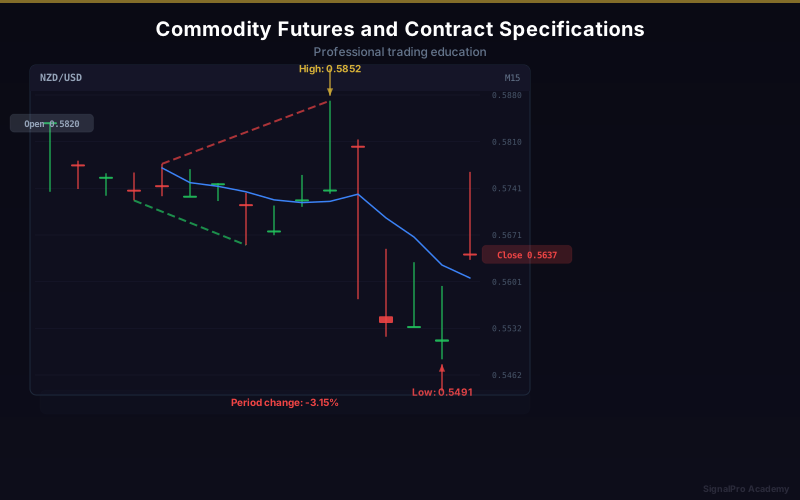
Commodity Futures and Contract Specifications
Futures contracts are the backbone of commodity trading. Understanding contract specifications, margin requirements, and rollover mechanics is essential for professional trading.
What is a Futures Contract?
Definition
- A standardized agreement to buy or sell a specific quantity of a commodity at a predetermined price on a future date
- Traded on regulated exchanges (CME, ICE, LME)
- Marked to market daily (daily settlement)
- Can be settled by physical delivery or cash
Key Terms
- Contract size: The quantity per contract (1,000 barrels of oil)
- Tick size: Minimum price movement ($0.01 per barrel = $10)
- Tick value: Dollar value of one tick ($10 for CL)
- Expiration: Month and day when the contract settles
- Settlement: Physical delivery or cash settlement
Major Contract Specifications
Crude Oil (CL)
- Exchange: NYMEX/CME
- Contract size: 1,000 barrels
- Tick size: $0.01/barrel = $10
- Trading hours: Nearly 24 hours (Sunday-Friday)
- Delivery: Cushing, Oklahoma
- Monthly expiration
Gold (GC)
- Exchange: COMEX/CME
- Contract size: 100 troy ounces
- Tick size: $0.10/oz = $10
- Active months: February, April, June, August, October, December
- Delivery: COMEX approved vault in New York
Natural Gas (NG)
- Exchange: NYMEX/CME
- Contract size: 10,000 MMBtu
- Tick size: $0.001/MMBtu = $10
- Monthly expiration
- Delivery: Henry Hub, Louisiana
Corn (ZC)
- Exchange: CBOT/CME
- Contract size: 5,000 bushels
- Tick size: $0.25/bushel = $12.50
- Active months: March, May, July, September, December
- Delivery: Chicago area
E-micro Contracts (Smaller)
- Micro Gold (MGC): 10 oz ($1 per tick)
- Micro Crude (MCL): 100 barrels ($1 per tick)
- Perfect for smaller accounts
- Same market exposure, lower capital requirement
Margin and Leverage
Initial Margin
- The deposit required to open a position
- Set by the exchange (minimum) and broker (may be higher)
- Typically 5-15% of contract value
- Example: Crude oil at $80 = $80,000 value, margin ~$6,000
Maintenance Margin
- Minimum balance required to keep position open
- Usually 70-80% of initial margin
- If account falls below this, you receive a margin call
- Must deposit more funds or position is liquidated
Leverage Implications
- Futures provide substantial leverage
- A 1% move in oil = $800 on one contract (13% return on margin)
- Leverage works both ways - losses are equally amplified
- Professional traders rarely use more than 25% of available leverage
Contract Rollover
What is Rollover?
- Closing the expiring near-month contract
- Opening the same position in the next active month
- Must be done before the first notice day (physical delivery risk)
- Most traders roll 1-2 weeks before expiration
Rollover Costs
- Contango market: Rolling costs money (next month is more expensive)
- Backwardation market: Rolling earns money (next month is cheaper)
- Track the "roll yield" as part of your total return
- ETFs like USO suffer from persistent contango roll costs
Rollover Calendar
- Know the last trading day and first notice day for your contract
- Set reminders 2 weeks before expiration
- Never hold to expiration unless you want physical delivery
- Liquidity migrates to next month 1-2 weeks early
CME Micro Futures for Beginners
Advantages
- 1/10th the size of standard contracts
- Lower margin requirements
- Perfect for learning and practice
- Same market, lower risk
Available Micro Contracts
- Micro E-mini S&P 500 (MES)
- Micro E-mini Nasdaq (MNQ)
- Micro Gold (MGC)
- Micro Crude Oil (MCL)
- Micro Bitcoin (MBT)
Key Takeaways
- Always know your contract's tick value before trading
- Margin is not cost - it is a performance bond
- Roll contracts well before expiration to avoid delivery issues
- Micro contracts are ideal for newer traders with smaller accounts
- Leverage in futures is powerful - use it responsibly
Lesson Discussion