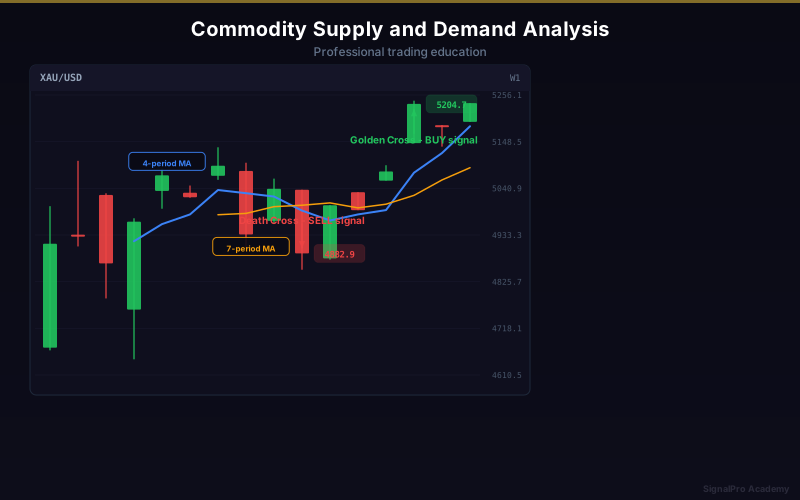
Commodity Supply and Demand Analysis
Every commodity price is ultimately determined by the balance between supply and demand. Mastering this framework gives you a fundamental edge.
The Supply/Demand Balance
Market Balance
- Surplus: Supply exceeds demand, prices tend to fall
- Deficit: Demand exceeds supply, prices tend to rise
- Balance: Supply approximately equals demand, prices stable
- Changes in the balance drive price trends
Stocks-to-Use Ratio
- Total inventories divided by annual consumption
- Low ratio = tight market = bullish
- High ratio = well-supplied = bearish
- The single most important fundamental metric
- Different commodities have different normal ranges
Analyzing Supply
Production Factors
- Capacity: How much can be produced at current infrastructure?
- Utilization: What percentage of capacity is being used?
- Growth: New projects coming online (pipeline analysis)
- Depletion: Existing sources declining in output
Supply Disruptions
- Weather events (hurricanes, drought, frost)
- Geopolitical conflicts (sanctions, wars, embargoes)
- Labor strikes at mines or refineries
- Infrastructure failures (pipeline ruptures, port closures)
- Government policy changes (export bans, quotas)
Supply Response Time
- Short-term (days-weeks): Cannot change significantly
- Medium-term (months): Some response from existing capacity
- Long-term (years): New projects can change supply picture
- This response lag creates extended price trends
Analyzing Demand
Demand Drivers
- Economic growth: GDP growth increases commodity consumption
- Population: More people require more resources
- Industrialization: Emerging market development
- Substitution: Cheaper alternatives reducing demand
- Technology: New uses creating demand (EV batteries)
Demand Elasticity
- Inelastic: Demand barely changes with price (oil short-term)
- Elastic: Demand responds strongly to price (luxury goods)
- Most commodities are inelastic short-term, elastic long-term
- Inelastic demand means supply changes cause larger price moves
Seasonal Demand Patterns
- Natural gas: Winter heating, summer cooling
- Gasoline: Summer driving season
- Agricultural: Planting and harvest cycles
- Precious metals: Indian wedding season (Oct-Dec), Chinese New Year
Practical Analysis Framework
Step 1: Establish the Balance Sheet
- Beginning stocks (carry-in from last period)
- Add: Production + Imports
- Subtract: Consumption + Exports
- Equals: Ending stocks
- Calculate stocks-to-use ratio
Step 2: Compare to History
- Is the current ratio above or below the 5-year average?
- What is the trend direction (tightening or loosening)?
- Are there risks to the forecast (weather, geopolitics)?
Step 3: Identify the Marginal Factor
- What is the MOST IMPORTANT variable right now?
- For oil: OPEC production decisions
- For grains: Weather during growing season
- For metals: Chinese demand data
- Focus your analysis on this key variable
Step 4: Position Accordingly
- Tightening balance = look for long setups
- Loosening balance = look for short setups
- Uncertain = stay flat or reduce size
- Combine with technical analysis for entry timing
Data Sources
Energy
- EIA (US Energy Information Administration)
- OPEC Monthly Oil Market Report
- IEA (International Energy Agency)
Agriculture
- USDA WASDE Report (monthly)
- USDA Crop Progress Report (weekly)
- FAO (Food and Agriculture Organization)
Metals
- LME Warehouse Stocks (daily)
- World Gold Council
- International Copper Study Group
Key Takeaways
- The stocks-to-use ratio is the most important fundamental metric
- Supply disruptions cause the biggest price spikes
- Demand is typically inelastic short-term, amplifying supply shocks
- Focus on the single most important variable driving each commodity
- Combine fundamental analysis with technicals for best results
Lesson Discussion