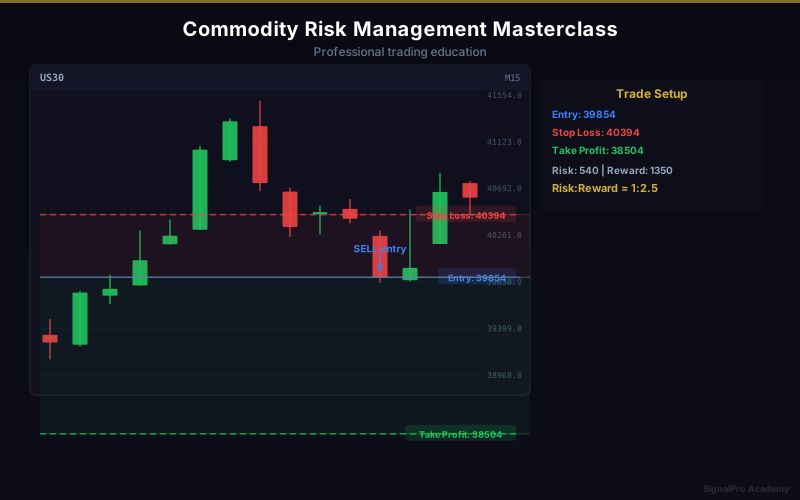
Commodity Risk Management Masterclass
Commodity markets are among the most volatile asset classes. Without proper risk management, even the best analysis will lead to account destruction.
Why Commodity Risk is Different
Unique Risk Factors
- Limit moves: Some commodity futures have daily price limits that can lock you in a losing position for multiple days
- Gap risk: Weekend gaps and overnight moves can be extreme
- Seasonal volatility: Risk levels change dramatically throughout the year
- Physical delivery: Holding to expiration can result in actual commodity delivery
- Margin calls: Leverage means you can lose more than your initial deposit
Volatility Comparison
- Natural gas: Average daily range 3-5%
- Crude oil: Average daily range 1.5-3%
- Gold: Average daily range 0.8-1.5%
- Corn: Average daily range 0.5-1.5%
- Compare to EUR/USD: Average daily range 0.5-0.8%
Position Sizing for Commodities
The Dollar Risk Method
- Determine your maximum dollar risk per trade
- Calculate the distance from entry to stop loss in ticks
- Multiply by tick value to get dollar risk per contract
- Divide maximum dollar risk by per-contract risk
- Result = number of contracts to trade
Example: Crude Oil Trade
- Account size: $50,000
- Risk per trade: 2% = $1,000 maximum
- Entry: $78.00, Stop: $76.50 (150 ticks)
- Dollar risk per contract: 150 x $10 = $1,500
- Position size: $1,000 / $1,500 = 0.67 contracts
- Trade 1 micro contract (MCL) or wait for a tighter setup
Volatility-Adjusted Position Sizing
- Use ATR (Average True Range) for each commodity
- When ATR is above average, reduce position size
- When ATR is below average, standard position size
- This prevents over-exposure during volatile periods
- Natural gas before winter: Cut size by 50%
Stop Loss Strategies
Fixed Dollar Stop
- Set maximum dollar loss per trade
- Adjust position size to accommodate
- Ensures no single trade can damage the account
- Recommended for beginners
Technical Stop
- Place stops below support or above resistance
- Use recent swing lows/highs
- Must calculate position size based on stop distance
- Best approach for intermediate traders
Volatility Stop
- Use 1.5-3x ATR from entry
- Adapts to current market conditions
- Wider during volatile periods, tighter during calm
- Reduces being stopped out by normal noise
Time Stop
- Exit if the trade has not moved in your favor within X days
- Commodity trades should show profit relatively quickly
- If your thesis is not playing out, exit and reassess
- Prevents capital being tied up in dead trades
Portfolio Risk Management
Correlation Awareness
- Do not be long crude oil AND heating oil AND gasoline simultaneously
- These are highly correlated - it is one big energy bet
- Diversify across commodity sectors: energy, metals, agriculture
- Maximum 3 correlated positions at any time
Total Portfolio Heat
- Never risk more than 6% of total account at any time
- This means maximum 3 trades at 2% risk each
- During high-uncertainty events (OPEC, USDA), reduce further
- Cash is a position - being flat is sometimes the best trade
Drawdown Rules
- After 5% account drawdown: Reduce position sizes by 50%
- After 10% drawdown: Stop trading, review and analyze
- After 15% drawdown: Take a mandatory 1-week break
- These rules protect against emotional revenge trading
Event Risk Management
High-Impact Events
- OPEC meetings (oil)
- EIA inventory reports (oil, gas)
- USDA crop reports (agriculture)
- FOMC decisions (gold)
- Geopolitical events (energy, gold)
Rules for Events
- Reduce or close positions before major reports
- If holding, cut position size to 50% of normal
- Widen stops to accommodate post-event volatility
- Never add to a position just before a major event
- Wait for post-event volatility to settle before new entries
Key Takeaways
- Commodity risk management must account for higher volatility than forex or stocks
- Position size based on dollar risk per trade, NEVER a fixed number of contracts
- Adjust position sizing when volatility is above average
- Limit total portfolio risk to 6% of account at any time
- Reduce exposure before known high-impact events
Lesson Discussion