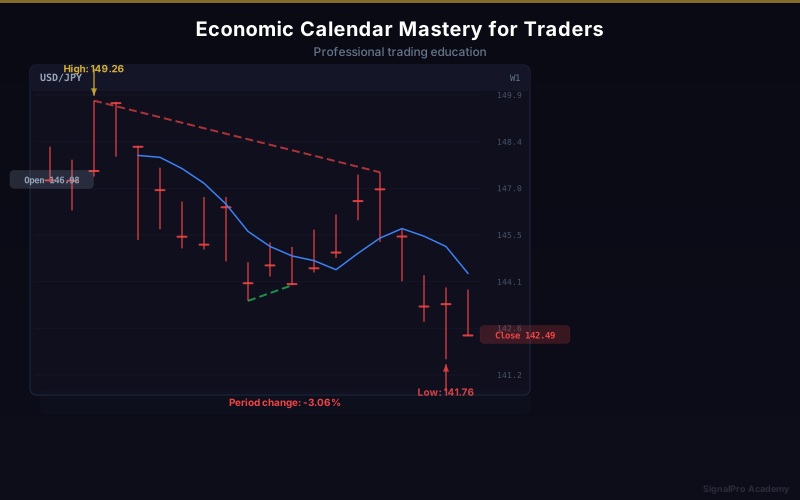
Economic Calendar Mastery for Traders
The economic calendar is every trader's most important tool after their charts. Knowing what data is coming, when, and how to trade it separates professionals from amateurs.
Understanding the Economic Calendar
What It Shows
- Scheduled economic data releases with dates and times
- Previous data, market consensus expectations, and actual results
- Impact rating (high, medium, low)
- Country/currency affected
Impact Ratings Explained
High Impact (Red)- Central bank rate decisions
- Non-Farm Payrolls (NFP)
- CPI/Inflation data
- GDP releases
- These can move markets 50-200+ pips in forex
- Retail sales, PMI data
- Trade balance, industrial production
- Housing data
- Typically 20-50 pip moves in forex
- Minor survey data, secondary indicators
- Usually does not move markets significantly
- Can matter if they surprise significantly
The Most Important Economic Events
Tier 1 (Must Watch)
- Federal Reserve Interest Rate Decision: 8 times per year
- Non-Farm Payrolls: First Friday of every month
- US CPI (Consumer Price Index): Monthly
- ECB Rate Decision: Every 6 weeks
- BOE Rate Decision: 8 times per year
Tier 2 (Very Important)
- ISM Manufacturing and Services PMI: Monthly
- US Retail Sales: Monthly
- GDP Reports: Quarterly
- FOMC Minutes: Released 3 weeks after each meeting
- Bank of Japan Rate Decision: 8 times per year
Tier 3 (Important for Specific Currencies)
- Australian Employment Data: AUD
- Canadian Employment Data: CAD
- China GDP and Trade Data: AUD, NZD, commodity currencies
- UK CPI and Employment: GBP
- Eurozone PMI Flash: EUR
How to Trade Economic Events
Pre-Event Preparation
- Check consensus expectations (Bloomberg, Forex Factory)
- Identify the range of estimates (not just the median)
- Check your existing positions and exposure
- Decide whether to trade the event or avoid it
- If trading: Set stops, reduce position size, have a plan for both scenarios
The Event Itself
- Data releases at the scheduled time (to the second)
- Algorithms react in milliseconds
- Initial spike is often noise (whipsaw)
- Wait 5-15 minutes for direction to establish
- The press conference (if applicable) often moves markets more than the data
Post-Event Trading
- The sustained move after initial volatility is the tradeable move
- Compare actual data to the full range of estimates, not just consensus
- Read central bank statements and minutes carefully
- Watch for revisions to prior data (often overlooked but important)
Event Calendar Strategy
Weekly Planning
- On Sunday, review the upcoming week's calendar
- Identify high-impact events by currency
- Plan which events you will trade vs avoid
- Pre-set alerts for key release times
- Check for any speeches by central bank officials
Position Management Around Events
- Reduce position sizes before high-impact events
- Widen stops to accommodate event volatility
- Consider closing positions if you do not want event exposure
- If holding through, accept increased risk and size accordingly
Common Mistakes
- Trading every event instead of focusing on the most important ones
- Entering trades just before data releases (gambling)
- Using normal position sizes during event windows
- Ignoring the difference between the actual number and expectations
- Not accounting for prior revisions
Key Takeaways
- The economic calendar should be checked daily and planned weekly
- Not all events are tradeable - focus on Tier 1 and Tier 2
- Consensus deviation matters more than the absolute number
- Wait for the initial volatility to settle before entering
- Proper position sizing during events is non-negotiable
Lesson Discussion