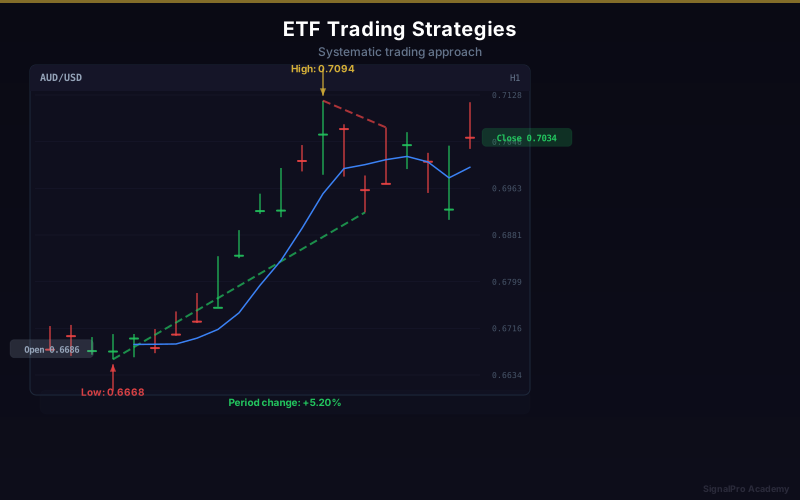
ETF Trading Strategies
ETFs combine the diversification of funds with the tradability of stocks.
What are ETFs?

Definition
- Exchange-Traded Funds
- Trade like stocks on exchanges
- Track indices, sectors, or themes
- Diversification in one purchase
Types of ETFs
- Index: SPY (S&P 500), QQQ (Nasdaq)
- Sector: XLK (Tech), XLF (Finance)
- Thematic: ARKK (Innovation), TAN (Solar)
- Bond: TLT, BND
- Commodity: GLD (Gold), USO (Oil)
- Leveraged: TQQQ (3x Nasdaq), SQQQ (3x inverse)
Popular ETF Strategies
Index Investing
- Buy and hold SPY or VOO
- Historically 10% annual return
- Lowest cost, lowest effort
- Beat most active managers
Sector Rotation
- Rotate between sector ETFs
- Follow economic cycle
- Overweight strong sectors
- Underweight weak sectors
Pairs Trading
- Long strong sector ETF
- Short weak sector ETF
- Market-neutral approach
- Profit from relative performance
Leveraged ETF Day Trading
- TQQQ, SQQQ for Nasdaq exposure
- 3x daily moves
- Day trading only (daily reset)
- Never hold overnight
Analyzing ETFs
Key Metrics
- Expense Ratio: Annual fee
- AUM: Assets under management
- Volume: Liquidity indicator
- Tracking Error: How closely follows index
Selection Criteria
- Low expense ratio (under 0.20%)
- High trading volume
- Large AUM (stability)
- Low tracking error
Risk Considerations
- Leveraged ETFs decay over time
- Thematic ETFs can be concentrated
- International ETFs have currency risk
- Commodity ETFs have contango risk
- Always check what is inside the ETF
Lesson Discussion