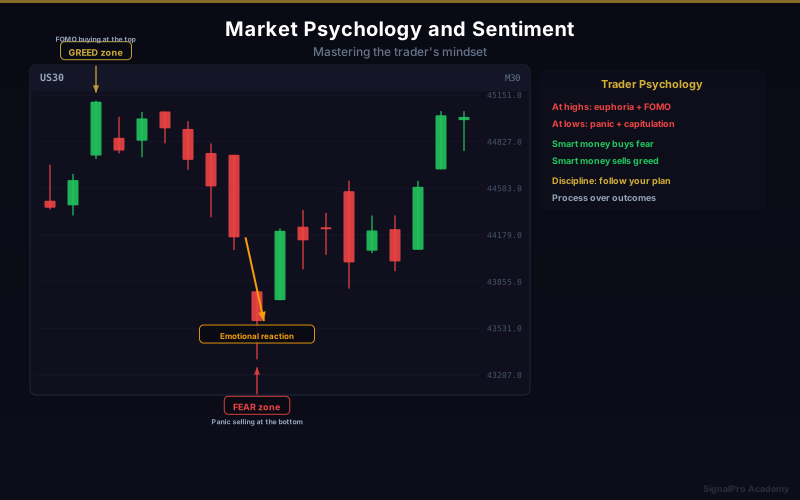
Market Psychology and Sentiment
Understanding crowd psychology gives you an edge in stock market timing.
Sentiment Indicators
VIX (Fear Index)
- Measures expected S&P 500 volatility
- Below 15: Complacency
- 15-25: Normal
- Above 30: Fear
- Above 40: Extreme fear (buying opportunity)
Put/Call Ratio
- Ratio of put to call options volume
- Above 1.0: Bearish sentiment
- Below 0.7: Bullish sentiment
- Contrarian indicator at extremes
AAII Sentiment Survey
- Weekly bull/bear survey
- Extreme readings are contrarian
- Very bearish = market near bottom
- Very bullish = caution warranted
CNN Fear and Greed Index
- Composite of 7 indicators
- Scale: 0 (extreme fear) to 100 (extreme greed)
- Easy to use contrarian tool
Market Cycles and Emotions
At Market Bottoms
- Maximum pessimism
- Capitulation selling
- Nobody wants to buy
- Best buying opportunity
During Rally
- Skepticism turns to optimism
- Increasing participation
- FOMO starts building
At Market Tops
- Maximum optimism
- Everyone buying
- Greed dominates
- Risk is highest
During Decline
- Denial, then anxiety
- Selling pressure builds
- Fear takes over
- Leading to capitulation
Contrarian Trading
The Concept
- Buy when others are fearful
- Sell when others are greedy
- Extreme sentiment = turning point
- Requires courage and conviction
Practical Application
- Monitor sentiment indicators daily
- Note extreme readings
- Combine with technical analysis
- Scale into positions at extremes
- Patience for extreme readings
Media Sentiment
What to Watch
- Magazine covers as contrarian signals
- News headline tone
- Social media sentiment
- Analyst consensus
Key Principles
- Sentiment is a timing tool, not direction
- Extremes take time to develop
- Combine with price action
- Do not fight the trend, time entries
- Be fearful when others are greedy
Lesson Discussion