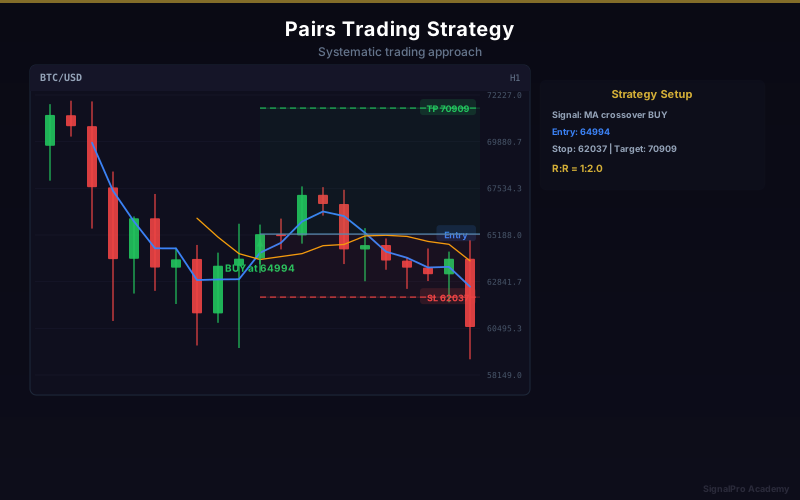
Pairs Trading Strategy
Pairs trading profits from relative price movements between correlated stocks.
What is Pairs Trading?
Concept
- Long one stock, short another
- Both in same sector/industry
- Profit from relative movement
- Market-direction neutral
Why It Works
- Correlated stocks tend to move together
- Temporary divergences create opportunities
- Mean reversion is reliable
- Reduces market risk
Finding Pairs
Good Pair Characteristics
- Same sector and industry
- Similar business models
- High historical correlation (0.8+)
- Similar market cap
- Examples: Coca-Cola/Pepsi, Visa/Mastercard
Correlation Analysis
- Calculate rolling correlation
- Look for consistently high correlation
- Minimum 1 year of data
- Check correlation is stable
Trading the Pair
Measuring Divergence
- Price ratio between two stocks
- Z-score of the ratio
- When Z-score exceeds 2: Entry signal
- When Z-score returns to 0: Exit
Entry Rules
- Z-score above 2: Short the outperformer, long the underperformer
- Z-score below -2: Long the outperformer, short the underperformer
- Equal dollar amounts on each side
Exit Rules
- Z-score returns to 0 (mean)
- Maximum hold time reached
- Stop loss at Z-score of 3
- Correlation breaks down
Risk Management
Position Sizing
- Equal dollar value on each leg
- Adjust for beta difference
- Risk 1-2% total on the pair
- Account for potential divergence
When Pairs Fail
- Fundamental change in one company
- Merger or acquisition
- Regulatory change
- Sector disruption
Tools
- Statistical software for correlation
- Pair trading screeners
- Z-score calculators
- Position tracking spreadsheet
Key Takeaways
- Pairs trading reduces market risk
- Choose highly correlated pairs
- Use Z-score for entry/exit timing
- Equal dollar weights on each side
- Have stop loss for when correlation breaks
Lesson Discussion