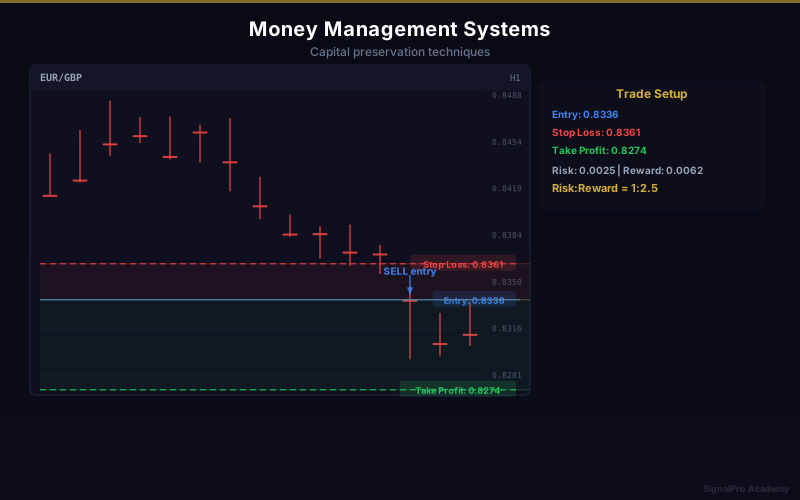
Money Management Systems
Money management determines how much you risk per trade. It is the single most important factor in long-term trading survival.
Fixed Percentage Risk
The most popular and recommended method:
How It Works
- Risk a fixed percentage of your account per trade
- Typically 1-2% of total equity
- As account grows, position size grows
- As account shrinks, position size shrinks
Example
- Account: $10,000
- Risk per trade: 1% = $100
- Stop loss: 50 pips
- Position size = $100 / (50 pips x pip value)
Benefits
- Self-adjusting to account size
- Protects during drawdowns
- Compounds during winning streaks
- Simple to implement
Fixed Dollar Risk
How It Works
- Risk a fixed dollar amount per trade
- Example: Always risk $100
- Does not change with account size
Pros and Cons
- Simple and consistent
- Does not compound with growth
- Risk percentage changes as account grows/shrinks
The Anti-Martingale System
How It Works
- Increase position size after wins
- Decrease position size after losses
- Opposite of the dangerous Martingale system
Implementation
- Win: Increase risk to 1.5%
- Two wins: Increase to 2%
- Loss: Return to base 1%
- Two losses: Decrease to 0.5%
Kelly Criterion
The Formula
- Kelly% = W - [(1 - W) / R]
- W = Win probability
- R = Win/Loss ratio
Example
- Win rate: 55% (W = 0.55)
- Average win/loss ratio: 1.5
- Kelly% = 0.55 - [(1 - 0.55) / 1.5] = 0.25 (25%)
- Use Half-Kelly (12.5%) for safety
Warning
- Full Kelly is extremely aggressive
- Always use Half-Kelly or Quarter-Kelly
- Requires accurate win rate and R:R data
The 6% Monthly Rule
How It Works
- Maximum monthly loss limit of 6% of account
- Once hit, stop trading for the month
- Prevents catastrophic monthly drawdowns
Implementation
- Start month with 6% risk budget
- Each loss subtracts from budget
- Budget remaining determines if you can trade
- Resets on the first of each month
Account Preservation Rules
The 2% Rule
- Never risk more than 2% on a single trade
- Even your highest conviction trade
The 6% Rule
- Stop trading if account drops 6% in a month
- Take a break and reassess
The 25% Rule
- If account drops 25% from peak, stop completely
- Full strategy review required
- Return with half your previous position size
Position Sizing Calculator
Inputs Needed
- Account balance
- Risk percentage
- Entry price
- Stop loss price
Formula
Position size = (Account x Risk%) / (Entry - Stop) per unit value
Key Takeaways
- Risk 1-2% per trade maximum
- Use the method that fits your personality
- Never deviate from your money management rules
- Position sizing matters more than entry strategy
- Capital preservation is your primary objective
Lesson Discussion