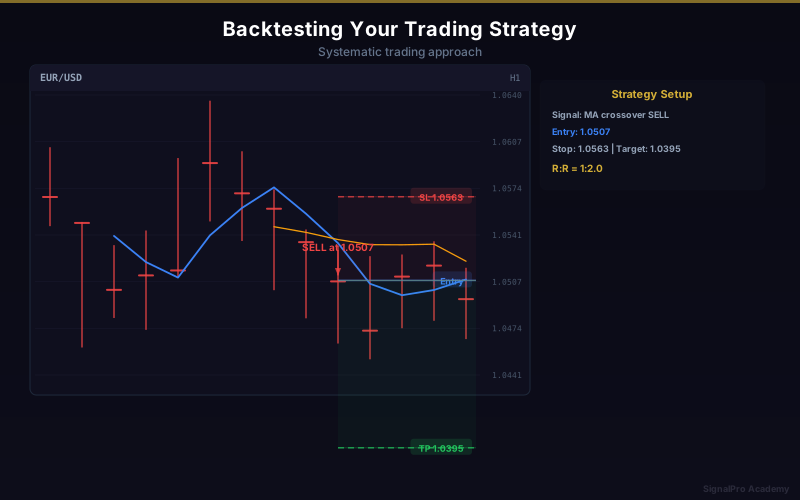
Backtesting Your Trading Strategy
Backtesting allows you to validate your trading strategy using historical data before risking real capital. Every serious trader must backtest.
What is Backtesting?
Backtesting is the process of applying your trading rules to historical price data to see how the strategy would have performed in the past.
Why Backtest?
- Validates (or invalidates) your strategy
- Builds confidence in your approach
- Reveals flaws before losing real money
- Provides statistical data on expected performance
- Removes emotional bias from strategy evaluation
Manual Backtesting Process
Step 1: Define Your Rules
Write out exact entry and exit rules:
- Entry criteria (indicators, patterns, levels)
- Stop loss placement
- Take profit levels
- Position sizing rules
- Maximum trades per day/week
Step 2: Scroll Back in Time
- Open your chart on the trading timeframe
- Scroll back 6-12 months
- Use the replay/scroll function to move forward candle by candle
- Do NOT look ahead at future candles
Step 3: Record Every Trade
For each setup that meets your rules:
- Entry date and price
- Stop loss level
- Take profit level(s)
- Result: win, loss, or breakeven
- Risk-to-reward achieved
Step 4: Analyze Results
After 100+ trades, calculate:
- Win Rate: Percentage of winning trades
- Average Win: Average profit on winners
- Average Loss: Average loss on losers
- Profit Factor: Gross profit / Gross loss
- Maximum Drawdown: Largest peak-to-trough decline
- Expectancy: (Win% x Avg Win) - (Loss% x Avg Loss)
What Good Results Look Like
Minimum Viable Strategy
- Win rate: 40%+ with 1:2+ R:R, or 55%+ with 1:1 R:R
- Profit factor: Above 1.5
- Maximum drawdown: Under 20%
- Expectancy: Positive number
- Sample size: At least 100 trades
Backtesting Pitfalls
Curve Fitting
- Optimizing for past data too much
- Strategy works perfectly on history but fails live
- Solution: Test on out-of-sample data
Survivorship Bias
- Only testing on assets that still exist
- May ignore delisted or failed assets
Look-Ahead Bias
- Unconsciously seeing future data
- Knowing the outcome before taking the trade
- Solution: Use bar-by-bar replay
Ignoring Costs
- Not accounting for spreads
- Forgetting commissions
- Ignoring slippage
- These reduce profitability significantly
Forward Testing (Paper Trading)
After backtesting:
- Trade the strategy live on a demo account
- Minimum 1-3 months of forward testing
- Compare results to backtest expectations
- If results match: Go live with small size
- If results differ: Investigate why
Key Takeaways
- Never trade a strategy you have not backtested
- Need 100+ trades for statistical significance
- Beware of curve fitting and look-ahead bias
- Forward test before going live
- Backtesting builds the confidence you need
Lesson Discussion