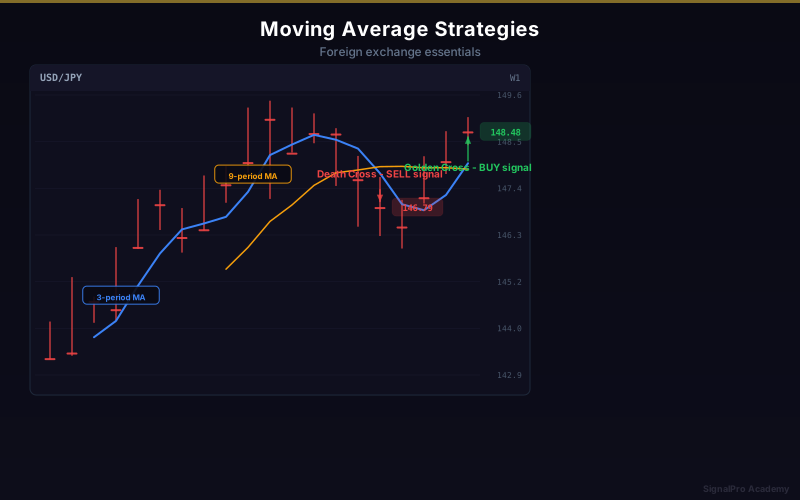
Moving Average Strategies
Moving averages smooth out price data to help identify trend direction and potential entry/exit points.
Types of Moving Averages
Simple Moving Average (SMA)
- Equal weight to all prices in period
- Slower to react to price changes
- Good for identifying major trends
Exponential Moving Average (EMA)
- More weight to recent prices
- Faster reaction to price changes
- Better for short-term trading
Popular Moving Average Periods
- 8/10 EMA: Very short-term, scalping
- 20/21 EMA: Short-term trend
- 50 EMA/SMA: Medium-term, very popular
- 100 SMA: Medium-long term
- 200 SMA: Long-term trend, institutional level
Trading Strategies
Moving Average Crossover
Golden Cross: 50 MA crosses above 200 MA- Bullish signal, potential uptrend beginning
- Bearish signal, potential downtrend beginning
Dynamic Support/Resistance
Use moving averages as dynamic levels:
- In uptrend: Buy bounces off rising MA
- In downtrend: Sell bounces off declining MA
Multiple Moving Averages
3 EMA Strategy (8, 21, 55):- All aligned = strong trend
- Buy when price above all three
- Sell when price below all three
Best Practices
- Use MAs for trend direction, not exact entry
- Combine with price action signals
- Higher timeframe MAs are more significant
- Don't rely on crossovers alone - they lag
- The 200 SMA is watched by institutions
Lesson Discussion