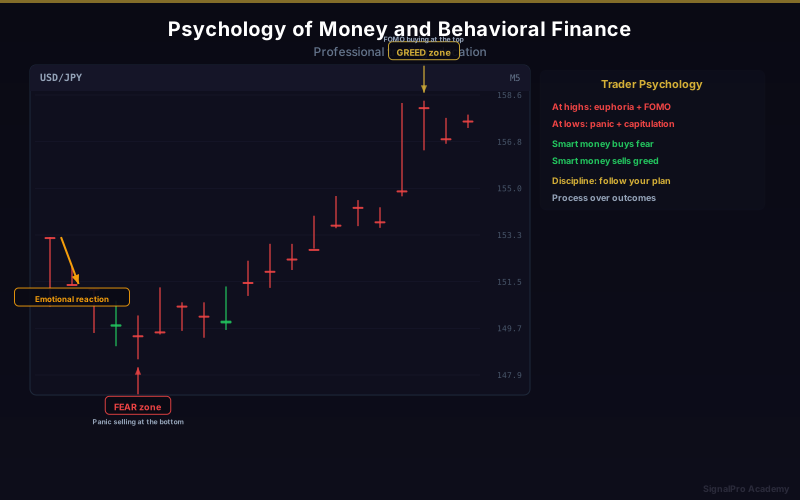
Psychology of Money and Behavioral Finance
The biggest threat to your financial success is not the market - it is your own brain. Understanding behavioral biases is the single most important financial skill.
Why Psychology Matters More Than Strategy
The Performance Gap
- The average stock fund returns about 10% annually
- The average investor in those funds earns about 6%
- The 4% gap is entirely due to behavioral mistakes
- Buying high (euphoria) and selling low (panic)
- This gap costs the average investor hundreds of thousands over a lifetime
Core Behavioral Biases
Loss Aversion
- Losses feel 2-2.5x more painful than equivalent gains feel good
- Losing $100 hurts more than gaining $100 feels rewarding
- This causes: Holding losers too long, selling winners too early
- In trading: Moving stops, refusing to take losses, revenge trading
Confirmation Bias
- We seek information that confirms our existing beliefs
- Ignore or dismiss contradicting evidence
- In trading: Only reading bullish analysis when you are long
- Cure: Actively seek opposing viewpoints before every trade
Recency Bias
- We overweight recent events in our decision-making
- After a winning streak: Feel invincible, increase risk
- After a losing streak: Feel hopeless, afraid to trade
- The market does not care about your recent results
Herd Mentality
- Following the crowd feels safe but is often wrong
- Maximum bullish sentiment occurs at market tops
- Maximum bearish sentiment occurs at market bottoms
- "Be fearful when others are greedy, greedy when others are fearful"
Anchoring Bias
- Fixating on a specific price or number as a reference point
- "The stock was at $100 so $80 must be cheap" (but fundamentals changed)
- In trading: Using your entry price as the reference instead of current reality
- The market does not know or care about your entry price
Overconfidence Bias
- We overestimate our knowledge and ability
- Leads to excessive trading and concentrated positions
- Studies show: More active traders earn lower returns
- The best traders are humble about what they do not know
Sunk Cost Fallacy
- Continuing a losing course of action because of what you have already invested
- "I have already lost $5,000, I cannot sell now"
- The loss has already occurred whether you sell or not
- The only question: Would you buy this position today at this price?
Money Scripts (Unconscious Beliefs)
Money Avoidance
- "Money is the root of all evil"
- Leads to: Self-sabotage, giving money away, avoiding financial planning
- Remedy: Money is a tool - it amplifies who you already are
Money Worship
- "More money will solve all my problems"
- Leads to: Overwork, excessive risk-taking, never feeling "enough"
- Remedy: Define "enough" and build toward that specific target
Money Status
- "My worth as a person equals my net worth"
- Leads to: Keeping up with appearances, overspending, shame about finances
- Remedy: Separate self-worth from net worth
Money Vigilance
- "I must be extremely careful with every dollar"
- Can be positive (responsible) or negative (excessive anxiety)
- Leads to: Under-investing, missing opportunities, financial anxiety
- Remedy: Build a plan and trust the process
Practical Solutions
Systematic Decision-Making
- Write your trading/investing rules BEFORE the emotion hits
- Follow the rules mechanically during live trading
- Review and adjust rules only when NOT in a trade
- Use checklists for every entry and exit decision
- Automate where possible (DCA, stop losses, rebalancing)
Emotional Management
- Track your emotional state in a journal
- Never make financial decisions when angry, excited, or fearful
- Take a 24-hour pause before any decision over $1,000
- Meditate or exercise before trading sessions
- Have an accountability partner who challenges your thinking
Environment Design
- Remove access to check portfolio every hour
- Set specific times for reviewing investments (weekly, not daily)
- Automate contributions and rebalancing
- Unsubscribe from sensational financial media
- Surround yourself with rational, long-term thinkers
Key Takeaways
- Behavioral biases cost investors more than fees or bad strategy
- Loss aversion is the most damaging bias for traders
- Write your rules before the emotions hit, then follow them mechanically
- Your unconscious beliefs about money shape your financial behavior
- Automation and systematic processes are the best defense against bias
Lesson Discussion