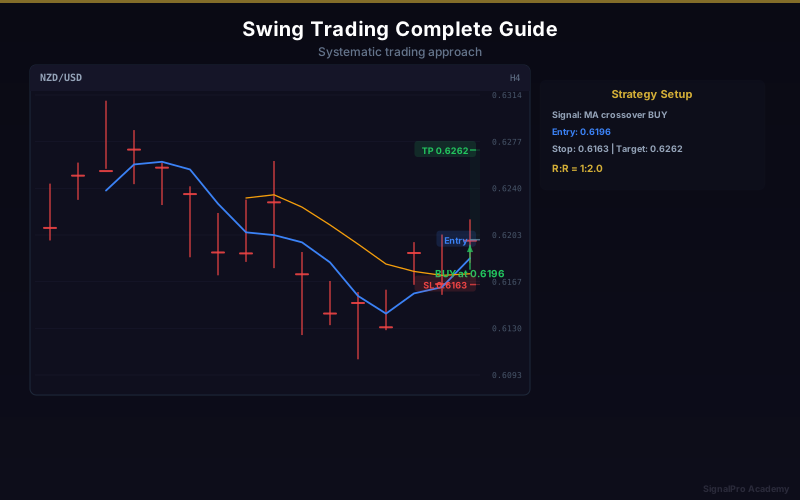
Swing Trading Complete Guide
Swing trading captures multi-day to multi-week price movements, offering a balance between active trading and lifestyle flexibility.
What is Swing Trading?
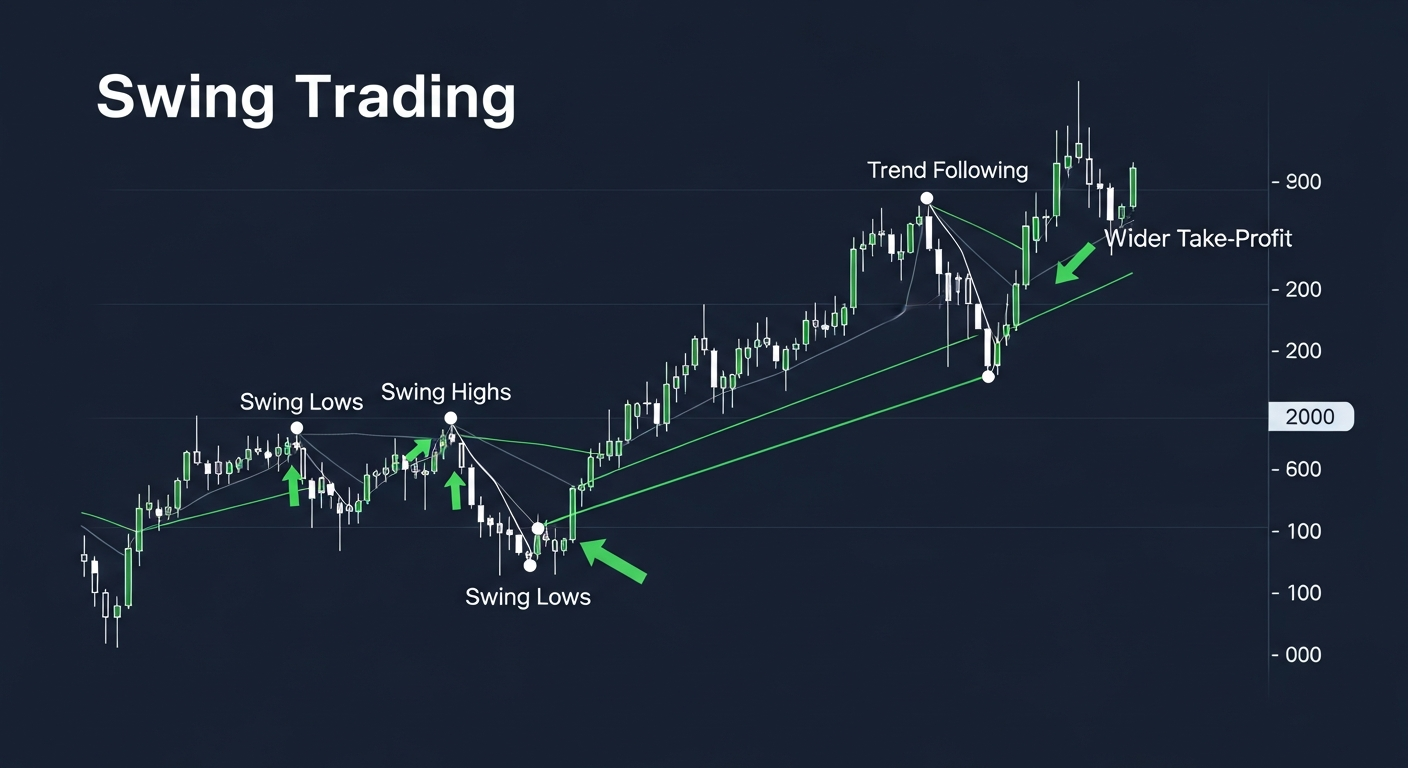
Definition
- Holding trades for days to weeks
- Capturing one price swing within a trend
- Less screen time than day trading
- Uses H4 and Daily timeframes primarily
Who It Suits
- Traders with full-time jobs
- Those who prefer analysis over execution speed
- Patient traders who can hold positions
- Intermediate to advanced skill level
Swing Trading Process
Step 1: Identify the Trend
- Use Weekly or Daily chart
- Moving averages for trend direction
- Higher highs and higher lows (uptrend)
- Lower highs and lower lows (downtrend)
Step 2: Find the Setup
- Wait for pullback in trending market
- Look for reversal candlestick at key level
- Confirm with indicator (RSI, MACD)
- Check for confluence (multiple signals)
Step 3: Plan the Trade
- Define entry, stop loss, and target BEFORE entering
- Risk to reward minimum 1:2
- Calculate position size based on stop distance
- Set alerts instead of watching constantly
Step 4: Execute and Manage
- Enter with limit order if possible
- Set stop loss immediately
- Trail stop as trade progresses
- Take partial profits at first target
Best Swing Trading Setups
Pullback to Moving Average
- Price returns to 20 or 50 EMA
- Bullish candle forms at MA
- Enter long with stop below MA
- Target previous high or beyond
Support and Resistance Bounce
- Price reaches key horizontal level
- Rejection candle forms
- Enter in direction of bounce
- Stop beyond the level
Breakout and Retest
- Price breaks key level
- Wait for retest of broken level
- Enter on successful retest
- Stop beyond retest candle
Swing Trading vs Day Trading
Advantages
- Less screen time required
- Lower transaction costs
- Larger moves captured
- Less stressful
Disadvantages
- Overnight and weekend risk
- Requires patience
- Swap costs on held positions
- Fewer trading opportunities
Key Takeaways
- Trade the Daily and H4 charts
- Always trade with the trend
- Wait for pullbacks to key levels
- Plan every trade before entering
- Trail stops and let winners run
Lesson Discussion