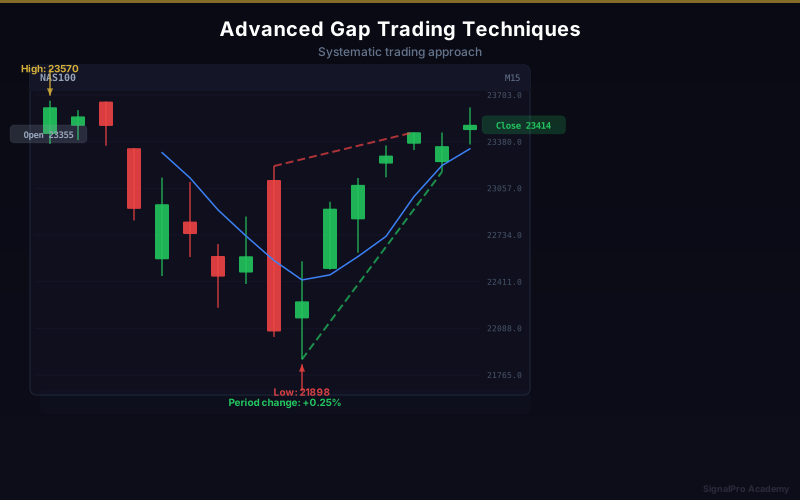
Advanced Gap Trading Techniques
Gaps create unique trading opportunities that occur when price opens significantly above or below the previous close, leaving an unfilled void on the chart.
Understanding Gap Types
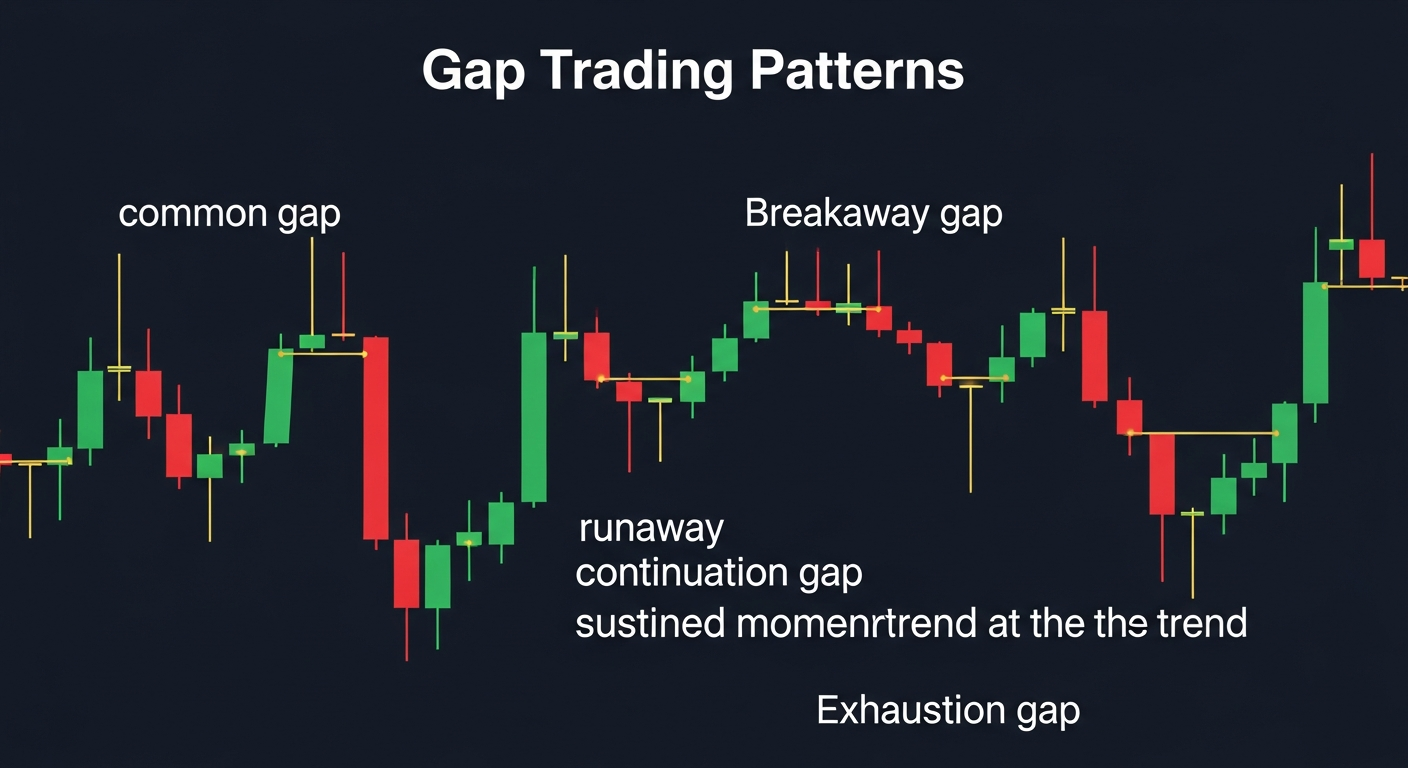
Common Gaps
- Occur frequently in normal trading conditions
- Low significance and usually fill quickly
- Found in consolidation ranges
- Success rate for fill: approximately 90%
Breakaway Gaps
- Appear at the start of a new trend
- Break through established support/resistance
- Accompanied by high volume
- Often do NOT fill for extended periods
- Signal the beginning of a significant move
Runaway (Continuation) Gaps
- Appear in the middle of an established trend
- Confirm strong momentum and institutional conviction
- Also called "measuring gaps" because they often occur at the halfway point of a move
- Use the gap location to project the trend target
Exhaustion Gaps
- Appear at the END of a trend
- Represent the final push before reversal
- Often fill within days as the trend reverses
- Look for reversal patterns after an exhaustion gap
Forex Weekend Gaps
Why Forex Gaps Happen
- Forex closes Friday evening, reopens Sunday evening
- Events during the weekend cause price dislocation
- Gaps are most common on pairs with high weekend news risk
- Political events, central bank comments, or geopolitical tensions
Weekend Gap Fill Strategy
- Identify the Sunday open gap direction and magnitude
- If the gap is less than 50 pips, it usually fills within 24 hours
- Enter in the direction of the gap fill (counter-gap)
- Stop loss: Beyond the Sunday open price plus a buffer
- Target: Full gap fill (Friday close price)
- Historical fill rate: approximately 70-80% within the same week
Stock Market Opening Gaps
Gap and Go Strategy
- Stock gaps up significantly on news or earnings
- First 5-minute candle confirms the direction
- Enter on a pullback to the 5-minute candle range
- Stop below the gap fill level
- Target: Measured move or intraday resistance
Gap Fade Strategy
- Stock gaps up into resistance or on low-quality news
- Wait for the first reversal signal (15-30 minutes after open)
- Enter short when momentum fails
- Stop above the opening high
- Target: Gap fill level
Gap Fill Probability by Type
- Common gaps: 90%+ fill within days
- Breakaway gaps: Less than 50% fill within weeks
- Runaway gaps: 50-60% eventually fill
- Exhaustion gaps: 80%+ fill quickly
Volume Analysis for Gaps
Confirming Gap Quality
- High volume gap = institutional participation = likely continuation
- Low volume gap = retail driven = likely to fill
- Volume should be at least 150% of average for a valid gap
Risk Management
Position Sizing for Gap Trades
- Gaps can be volatile so reduce position size by 25-50%
- Use limit orders to avoid slippage
- Set alerts rather than sitting and watching
- Define maximum loss before entry
Key Takeaways
- Not all gaps are created equal, identify the type first
- Common and exhaustion gaps fill, breakaway gaps often do not
- Weekend forex gaps fill 70-80% of the time
- Volume confirms gap quality and sustainability
- Always use reduced position sizes for gap trades
Lesson Discussion