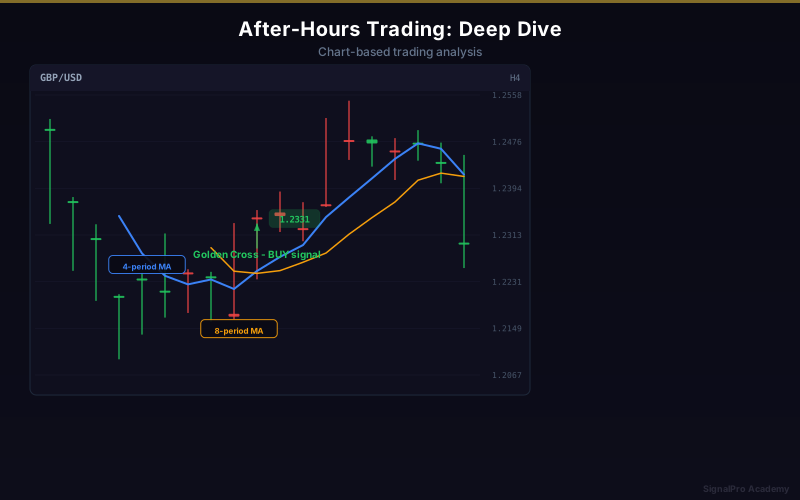
After-Hours Trading: Complete Indicator Deep Dive
What After-Hours Trading Measures
After-Hours Trading is a technical indicator that helps traders quantify a specific aspect of price action. Understanding what it actually measures — not just what color the line is — is essential.
How It's Calculated
The calculation involves price, time and a smoothing factor. While most platforms compute it automatically, understanding the formula helps you avoid misuse.
Default Settings vs Optimal Settings
- Default platform setting: as set by your platform.
- For stocks traders, consider testing alternative parameters that better fit the volatility profile of the asset.
What It Reveals
- Trend strength — when the indicator persists in one direction.
- Momentum shifts — when the indicator changes direction or crosses zero.
- Divergences — when price and indicator move in opposite directions, signaling potential reversal.
How to Use It
- Confirmation, not prediction. After-Hours Trading confirms what price is already telling you. Never trade After-Hours Trading alone.
- Combine with structure. Use After-Hours Trading signals at key support/resistance levels, not in the middle of nowhere.
- Look for confluence. A single After-Hours Trading signal is weaker than After-Hours Trading agreeing with another indicator and structure.
A+ Setup with After-Hours Trading
- Higher-timeframe trend bullish.
- Pullback to key support.
- After-Hours Trading bullish divergence on lower timeframe.
- Confirmation candle (engulfing or pin bar).
- Enter, stop below structure, target prior high.
Common Misuse
- Reading After-Hours Trading as a binary signal. It's a probability, not a guarantee.
- Using too short a period in choppy markets — generates false signals.
- Ignoring trend context — After-Hours Trading signals work best WITH the higher-timeframe trend.
Backtest Notes
Always backtest After-Hours Trading settings on the specific asset and timeframe you trade. Settings that work on EUR/USD daily may fail on Vol 75 1m.
Pro Tip
Most professionals overlay After-Hours Trading with a structural framework (price action + After-Hours Trading) rather than using After-Hours Trading as the primary signal source. The structure is the foundation, After-Hours Trading is confirmation.
Indicators are lenses, not crystal balls. Use them to clarify, never to predict.
Lesson Discussion