Trading Oil Geopolitics
Geopolitical events are responsible for some of the largest and fastest moves in oil prices. Understanding the political landscape is essential for any energy trader.
OPEC and OPEC+
What is OPEC?
- Organization of the Petroleum Exporting Countries
- 13 member nations led by Saudi Arabia
- Controls approximately 30% of global oil production
- Holds about 70% of proven oil reserves
- Meets at least twice per year to set production quotas
OPEC+ (Expanded Group)
- OPEC plus 10 additional countries (led by Russia)
- Controls approximately 40% of global production
- Production cuts or increases move prices significantly
- Internal politics and compliance are key factors
Trading OPEC Decisions
- Production cut: Bullish for oil (less supply)
- Production increase: Bearish (more supply)
- No change: Market reacts based on expectations
- Deeper-than-expected cut: Very bullish
- Compliance falling: Bearish (members cheating quotas)
OPEC Meeting Strategy
- Monitor pre-meeting rhetoric from Saudi and Russian officials
- Track analyst consensus expectations
- Position BEFORE the meeting is risky due to uncertainty
- Wait for the announcement, then trade the reaction
- Often a "buy the rumor, sell the fact" pattern
Key Geopolitical Hotspots
Middle East
- Strait of Hormuz: 20% of global oil passes through this narrow waterway
- Iran: Sanctions can remove millions of barrels from the market
- Iraq: Internal conflict can disrupt production
- Yemen/Saudi Arabia: Attacks on Saudi facilities (2019 Abqaiq attack spiked oil 15%)
- Any military escalation = instant oil price spike
Russia
- World's third-largest oil producer
- Sanctions (2022) disrupted global oil flows
- Pipeline politics affect European energy security
- Russia-Saudi Arabia alliance within OPEC+ is critical
Libya
- Frequent civil conflicts disrupt production
- Can swing from 1.2 million barrels/day to near zero
- Disruptions are sudden and unpredictable
- Usually temporary but price impact is immediate
Venezuela
- Has the world's largest proven oil reserves
- Production collapsed due to mismanagement and sanctions
- Sanctions relief could add barrels to market
- Political change would be significant for oil supply
How to Trade Geopolitical Risk
Risk Premium
- Oil often includes a "geopolitical risk premium"
- This premium expands during tensions, contracts during calm
- Estimating the premium: Compare current price to fundamental value
- When premium is very high, a resolution can cause a sharp decline
Trading Rules
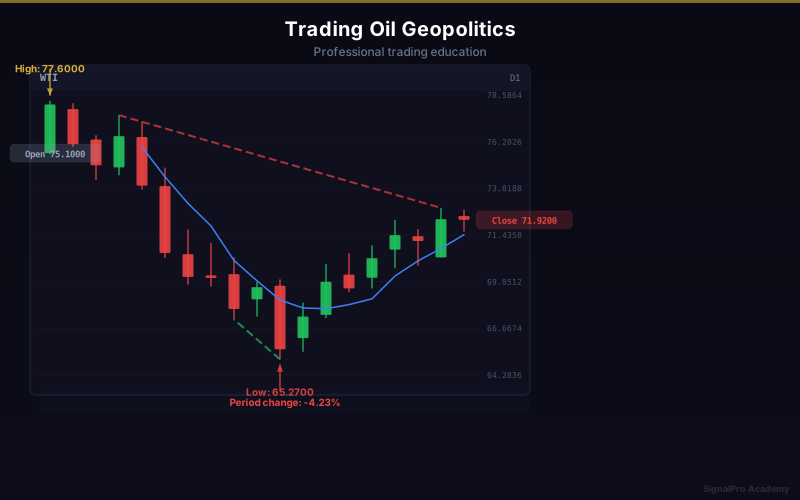
- Spike trades: Initial geopolitical spikes often partially reverse within 24-48 hours
- Sustained conflict: If conflict persists, the move continues
- Position sizing: Smaller than usual during geopolitical events
- Stop losses: Must be wider during geopolitical volatility
- News monitoring: Set alerts for major geopolitical keywords
Safe Haven Flows
- Oil spikes during Middle East tensions
- Gold spikes during any geopolitical uncertainty
- USD often strengthens (safe haven)
- Equities often decline (risk-off)
- Trade the basket, not just oil
Strategic Petroleum Reserves (SPR)
What is the SPR?
- Government-owned emergency oil reserves
- US SPR is the largest (currently about 350-400 million barrels)
- China, Japan, India, Europe also maintain reserves
SPR Impact on Markets
- SPR releases increase short-term supply (bearish)
- SPR refilling increases demand (bullish)
- SPR releases are political tools (elections, crises)
- 2022 US released largest-ever SPR draw (1 million barrels/day)
Key Takeaways
- OPEC decisions are the most predictable geopolitical oil factor
- Middle East tensions can spike oil prices instantly
- Geopolitical spikes often partially reverse within 48 hours
- Size positions smaller and use wider stops during geopolitical events
- SPR releases are temporary supply boosts with political timing
Lesson Discussion