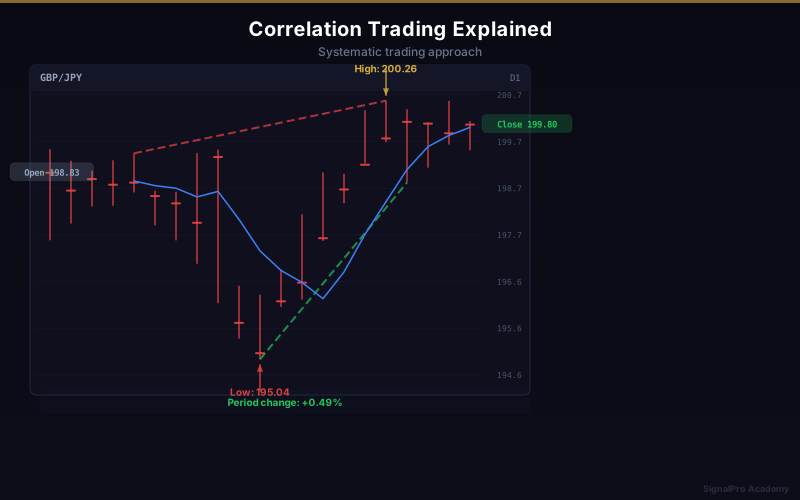
Correlation Trading Explained
Understanding correlation helps manage risk and find opportunities.
What is Correlation?

Definition
- How two pairs move in relation to each other
- Measured from -1 to +1
- Changes over time
Correlation Values
- +1.0: Perfect positive (move same direction)
- 0: No relationship
- -1.0: Perfect negative (move opposite)
Common Correlations
Highly Positive (+0.7 to +1.0)
- EUR/USD and GBP/USD
- AUD/USD and NZD/USD
- EUR/JPY and GBP/JPY
Highly Negative (-0.7 to -1.0)
- EUR/USD and USD/CHF
- GBP/USD and USD/CHF
- AUD/USD and USD/CAD (sometimes)
Variable Correlation
- USD/JPY and Gold (risk-off relationship)
- AUD/USD and Gold (commodity link)
- USD/CAD and Oil prices
Risk Management Applications
Avoiding Double Exposure
- Going long EUR/USD AND GBP/USD
- Essentially doubling your USD short
- If USD strengthens, both positions lose
- Reduce size on each or pick one
Hedging with Correlation
- Long EUR/USD, short USD/CHF
- Positions somewhat offset each other
- Reduces but does not eliminate risk
Portfolio Diversification
- Trade uncorrelated pairs
- Balance across currency groups
- Reduce overall portfolio volatility
Trading Opportunities
Correlation Breakdown
- When correlated pairs diverge
- One may be lagging
- Mean reversion opportunity
- Requires experience to trade
Confirmation Trading
- Check correlated pairs for agreement
- EUR/USD bullish setup
- Check if GBP/USD also bullish
- Alignment = higher conviction
Key Takeaways
- Correlations are not permanent
- Use for risk management primarily
- Correlated positions = increased risk
- Uncorrelated portfolio = smoother equity curve
Lesson Discussion