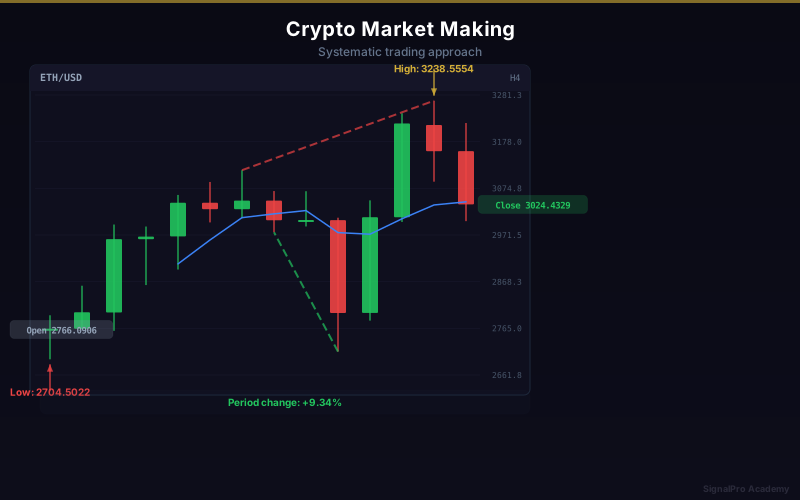
Crypto Market Making
Market making provides liquidity and earns profits from the bid-ask spread.
What is Market Making?
Definition
- Continuously quoting buy and sell prices
- Profiting from the spread
- Providing liquidity to markets
- Essential for market function
How it Works
- Place limit buy orders (bids)
- Place limit sell orders (asks)
- Earn the difference when both fill
- Manage inventory risk
AMM Market Making (DeFi)
Automated Market Makers
- Uniswap, Curve, Balancer
- Deposit token pairs into pools
- Algorithm sets prices
- Earn trading fees
Concentrated Liquidity
- Uniswap V3 innovation
- Set price range for liquidity
- Higher capital efficiency
- More active management needed
Impermanent Loss Deep Dive
- Loss vs simply holding tokens
- Increases with price divergence
- Permanent if withdrawn during divergence
- Offset by trading fees earned
CEX Market Making
Order Book Strategy
- Place orders on both sides
- Earn spread when filled
- Requires API trading
- Active inventory management
Grid Trading
- Set price grid with buy/sell levels
- Automated on many exchanges
- Works well in ranging markets
- Loses in strong trends
Risk Management
Inventory Risk
- Accumulating too much of one asset
- Market moves against your inventory
- Need hedging strategy
Execution Risk
- Orders not filling simultaneously
- Latency in execution
- Exchange downtime
Getting Started
DeFi Path
- Start with stable-stable pools (low IL)
- Graduate to major pairs (ETH/USDC)
- Try concentrated liquidity
- Monitor and adjust positions
CEX Path
- Use exchange grid bots
- Start with high-volume pairs
- Small position sizes initially
- Track performance carefully
Key Metrics
- Fees earned vs impermanent loss
- APR from trading fees
- Capital utilization rate
- Net portfolio change
Lesson Discussion