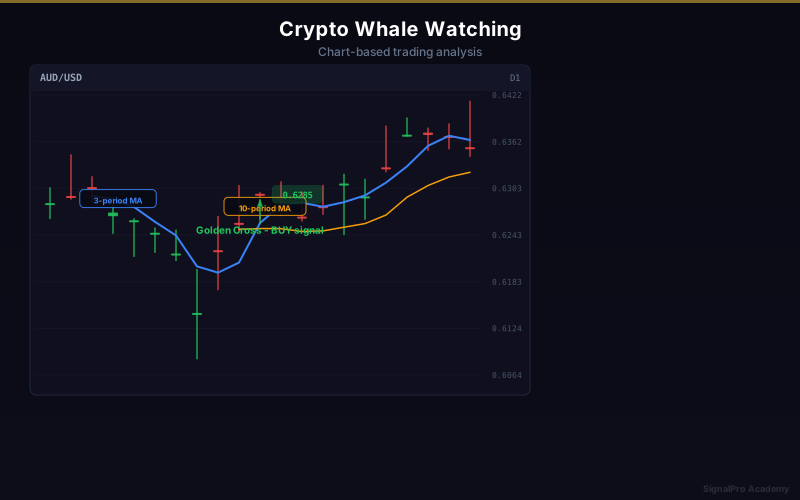
Crypto Whale Watching
Tracking whale activity provides early signals about market direction.
Who are Whales?

Definition
- Addresses holding large amounts of crypto
- Bitcoin: 1,000+ BTC
- Ethereum: 10,000+ ETH
- Can include funds, exchanges, early adopters
Why Track Them
- Move markets with large trades
- Often have better information
- Their actions precede price moves
- Pattern recognition opportunities
Whale Tracking Tools
Free Tools
- Whale Alert: Large transfer notifications
- Etherscan: Ethereum address tracking
- Blockchain explorers per chain
- Social media whale watchers
Premium Tools
- Nansen: Labels and smart money tracking
- Arkham Intelligence: Entity identification
- Glassnode: On-chain metrics
- Santiment: Social and on-chain data
Key Whale Behaviors
Accumulation Signs
- Large withdrawals from exchanges
- Moving to cold storage
- Increasing wallet balances
- Buying during fear/crashes
Distribution Signs
- Large deposits to exchanges
- Moving from cold to hot wallets
- Decreasing wallet balances
- Selling into rallies
Exchange Flow Signals
- Inflows = potential sell pressure
- Outflows = accumulation
- Net flow is what matters
- Track over days, not hours
Interpreting Whale Moves
Context Matters
- Not all transfers are sells
- Could be wallet reorganization
- Could be OTC deals
- Could be exchange cold wallet rotation
Confirmation Required
- Single whale move is not a signal
- Look for multiple whales acting similarly
- Combine with technical analysis
- On-chain trends over individual transactions
Practical Application
- Set up Whale Alert notifications
- Monitor key addresses for your holdings
- Track exchange net flows daily
- Combine whale data with chart analysis
- Do not panic on single large transfer
Lesson Discussion