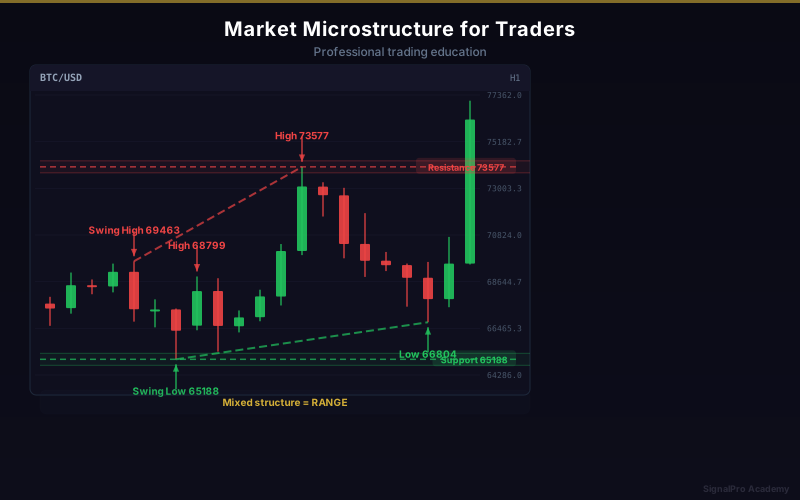
Market Microstructure for Traders
Market microstructure explains how orders become trades and how prices are actually determined behind the scenes.
How Orders Work
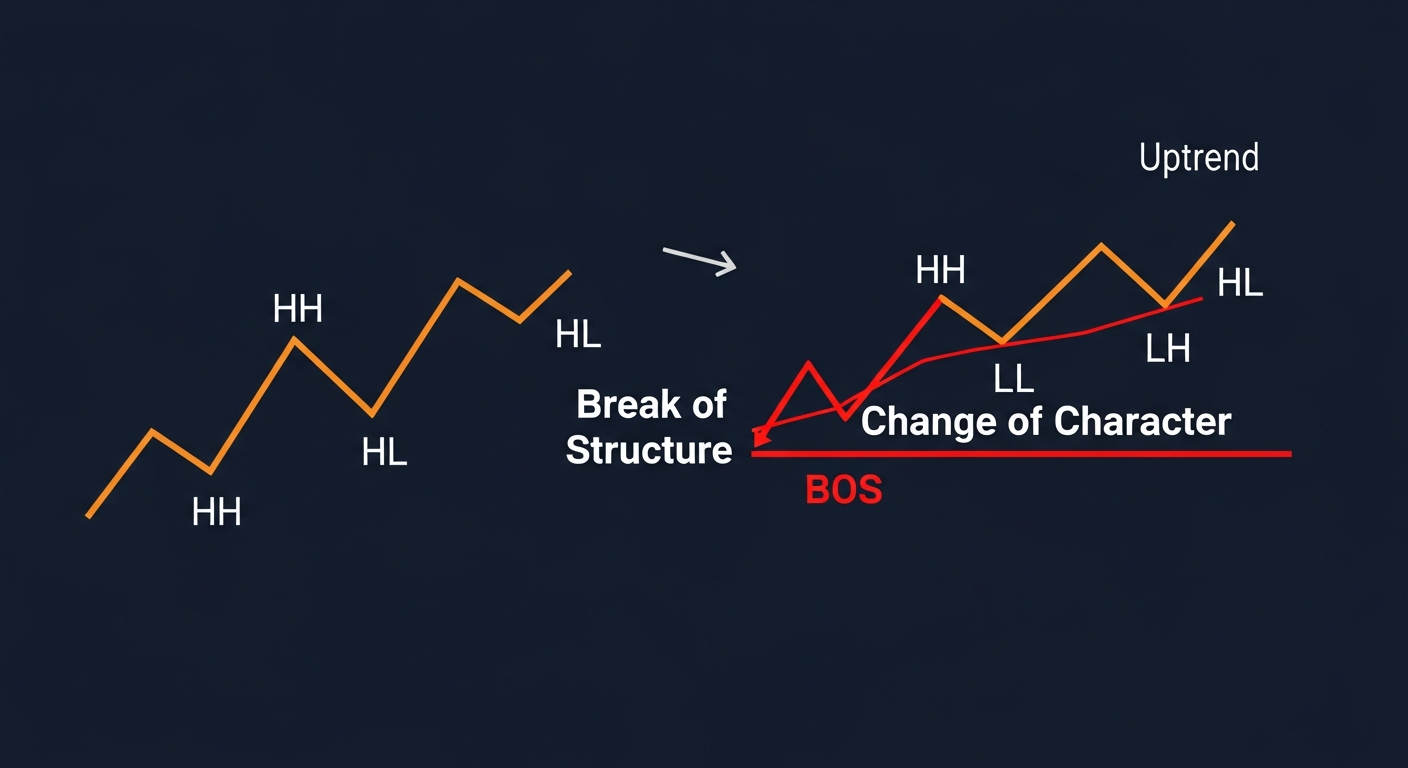
The Order Book
- Lists all pending buy and sell orders
- Bids (buy orders) on one side
- Asks (sell orders) on other side
- Gap between best bid and ask = spread
Market Makers
- Provide liquidity by quoting both sides
- Profit from the spread
- Take the other side of your trade
- Banks and large institutions in forex
Order Matching
- Market orders matched against limit orders
- Best price gets filled first
- Large orders may be split
- Slippage occurs when liquidity is thin
Price Discovery
What Moves Prices
- Imbalance between buyers and sellers
- Large orders absorb available liquidity
- Information asymmetry (someone knows something)
- Sentiment shifts and momentum
The Spread
- Tight spread: High liquidity, efficient market
- Wide spread: Low liquidity, uncertainty
- Spreads widen during news and low-volume hours
- Your cost of doing business
Liquidity Concepts
Visible Liquidity
- Orders sitting in the order book
- Can be seen on Level 2 data
- May be pulled before execution (spoofing)
Hidden Liquidity
- Stop losses clustered at key levels
- Iceberg orders (partially hidden)
- Dark pool transactions
- Smart money knows where stops sit
Liquidity Pools
- Levels where many stops or orders cluster
- Above recent highs (buy stops)
- Below recent lows (sell stops)
- Price is attracted to liquidity pools
How Institutions Trade
Their Challenge
- Massive order sizes (millions of units)
- Cannot fill at one price without moving market
- Use algorithms to break up orders
- Accumulate or distribute over time
What This Means for You
- Institutions create the ranges we see
- Breakouts happen when they are done
- False breakouts are liquidity hunts
- Understanding this gives you edge
Practical Applications
Order Flow Trading
- Watch for large orders being absorbed
- Identify levels with clustered stops
- Expect price to hunt those stops
- Trade the reversal after the hunt
Tape Reading
- Monitor time and sales data
- Watch order size patterns
- Large orders at key levels = institutional
- Rapid small orders = algorithmic
Key Takeaways
- Price moves to where orders are waiting
- Your stop loss is someone else target
- Liquidity drives price movement
- Institutions need your orders to fill theirs
- Think like a market maker, not a gambler
Lesson Discussion