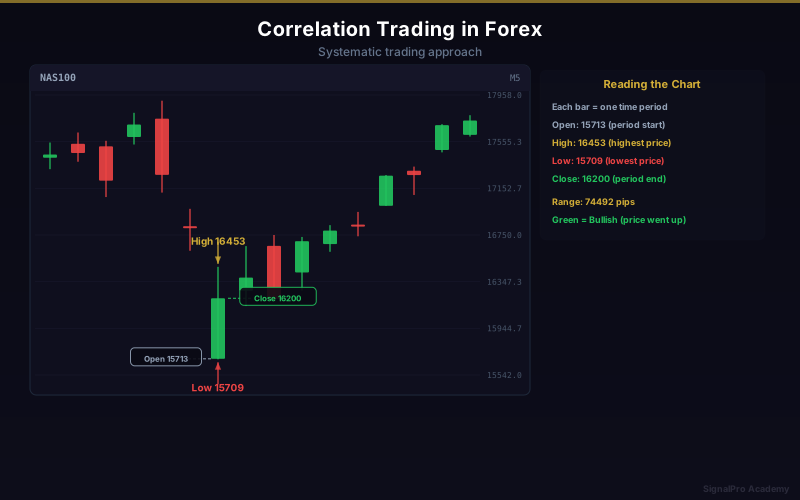
Correlation Trading in Forex
Understanding how currency pairs move in relation to each other is essential for managing portfolio risk and finding high-probability trades.
Understanding Correlation
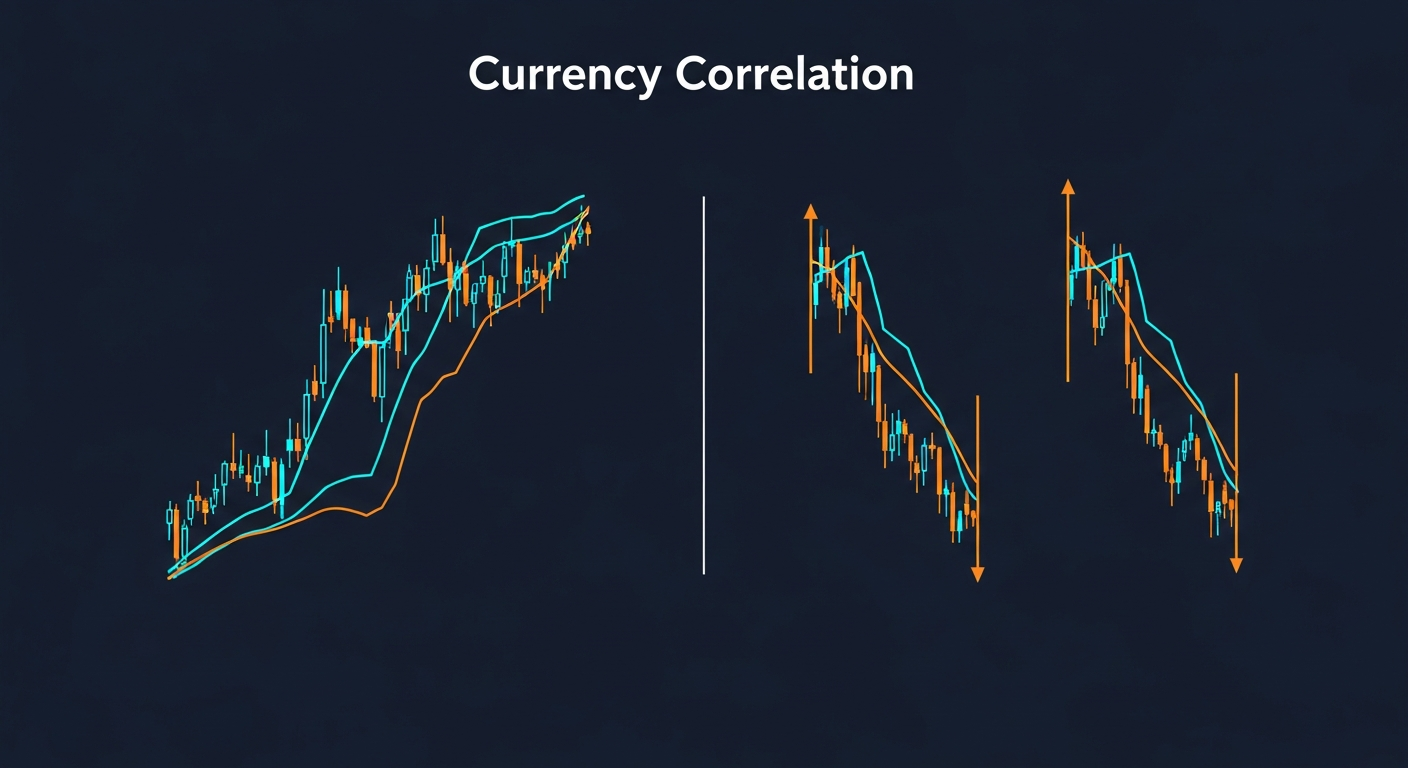
Correlation Coefficient
- Ranges from -1.0 to +1.0
- +1.0: Pairs move perfectly together
- 0: No relationship
- -1.0: Pairs move perfectly opposite
- Measured over specific time period
Why Correlations Exist
- Shared currency (EUR/USD and GBP/USD both have USD)
- Economic links (AUD and NZD economies linked)
- Commodity relationships (CAD and oil)
- Risk sentiment (JPY as safe haven)
Major Correlations
Highly Positive (+0.7 to +1.0)
- EUR/USD and GBP/USD
- AUD/USD and NZD/USD
- EUR/JPY and GBP/JPY
Highly Negative (-0.7 to -1.0)
- EUR/USD and USD/CHF
- GBP/USD and USD/CHF
- AUD/USD and USD/CAD (sometimes)
Commodity Correlations
- USD/CAD inversely correlated with Oil
- AUD/USD positively correlated with Gold
- USD/JPY and US Bond Yields
Risk Management with Correlations
Avoiding Double Exposure
- Long EUR/USD AND long GBP/USD = double USD short
- If dollar strengthens, both positions lose
- Reduce size or pick one pair
Portfolio Heat Check
- List all open positions
- Check correlation between each pair
- Highly correlated positions = combined risk
- Maximum 3% total risk on correlated trades
Trading Strategies
Correlation Breakdown
- When normally correlated pairs diverge
- One may be lagging behind
- Trade the lagging pair to catch up
- Requires experience and careful analysis
Confirmation Trading
- Want to go long EUR/USD?
- Check if GBP/USD also looks bullish
- Check if USD/CHF looks bearish
- Agreement across pairs = higher conviction
Hedging
- Long EUR/USD, short USD/CHF
- Positions partially offset each other
- Reduces risk but also reduces profit
- Use when uncertain about direction
Important Notes
- Correlations change over time
- Check on weekly basis minimum
- Crisis events can break correlations
- Use primarily for risk management
- Free correlation tools available online
Lesson Discussion