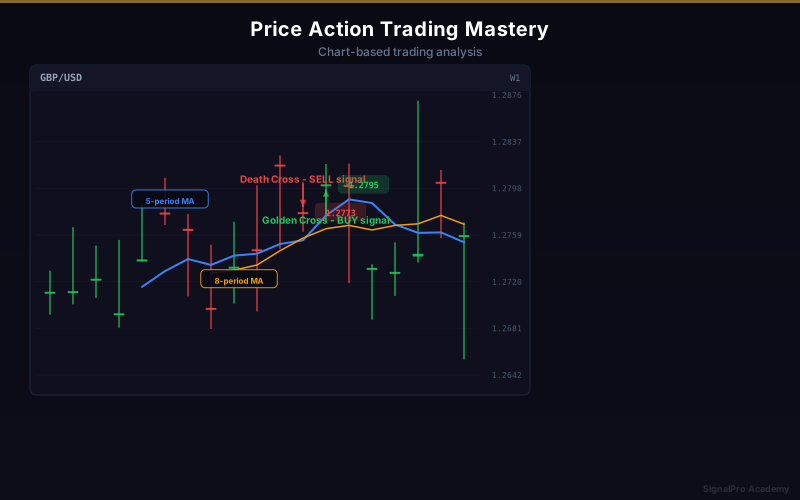
Price Action Trading Mastery
Price action trading uses raw price movement without indicators for cleaner, more direct analysis.
What is Price Action?
- Trading based on price movement alone
- No lagging indicators
- Reading market psychology
- Understanding supply and demand
Core Price Action Elements
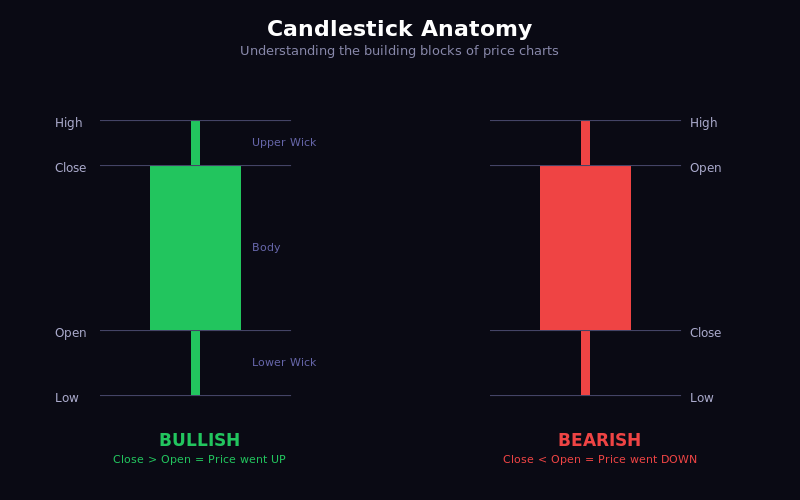
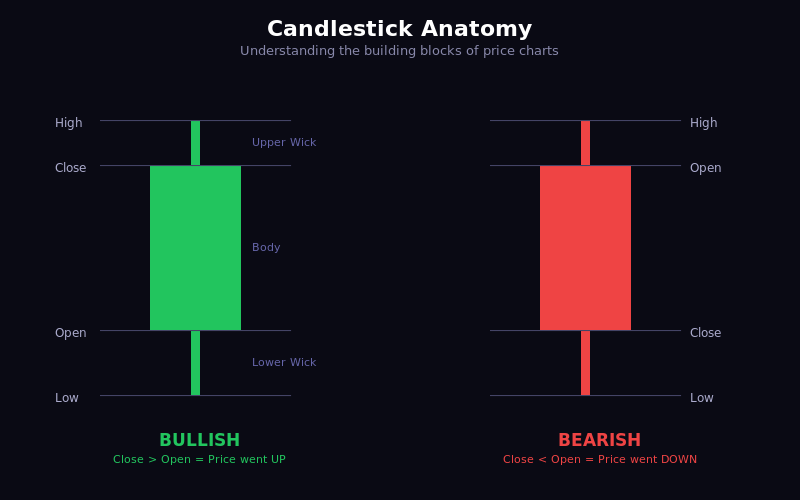
Candlestick Analysis
- Body size indicates conviction
- Wicks show rejection
- Patterns reveal sentiment
- Context is everything
Market Structure
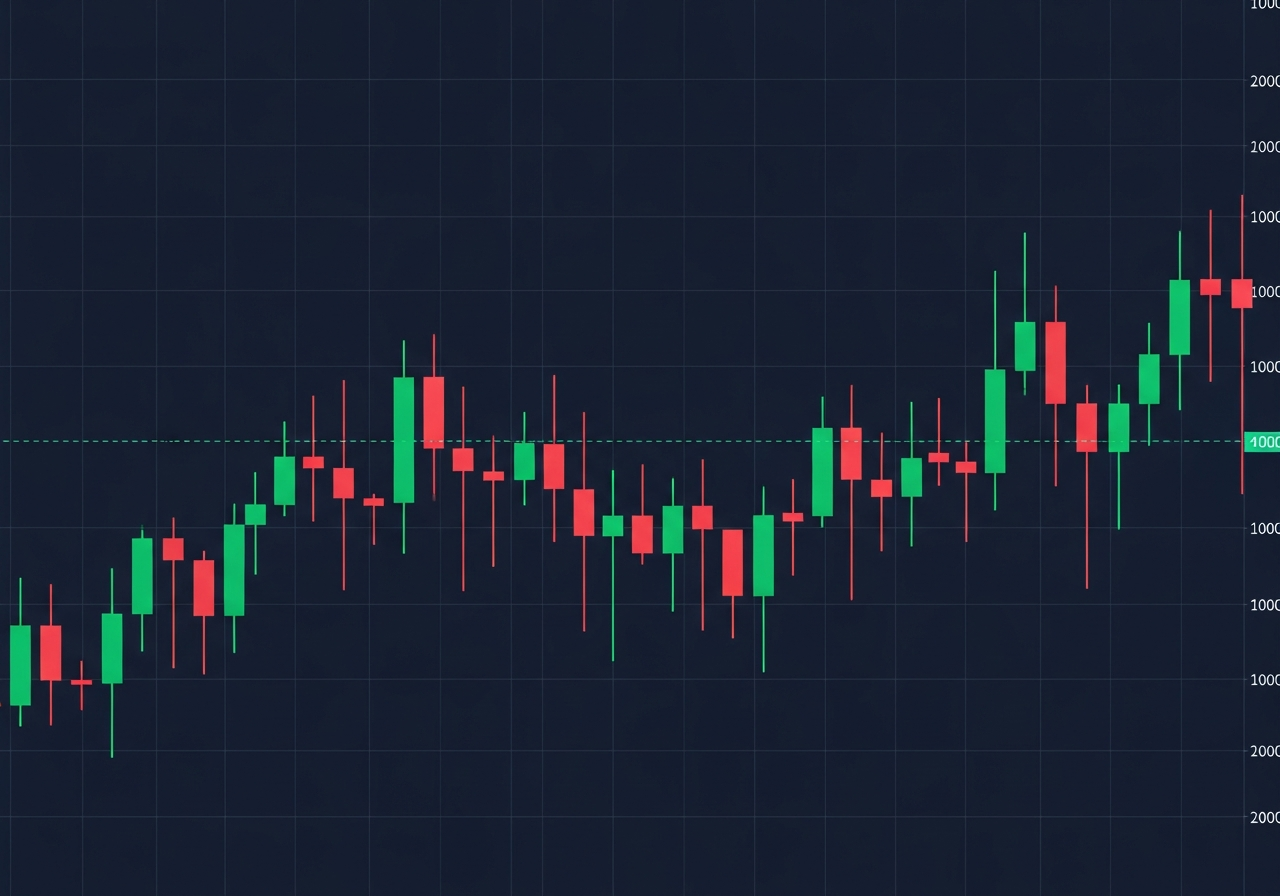
- Higher highs/lows = uptrend
- Lower highs/lows = downtrend
- Structure breaks = changes
Key Levels
- Support and resistance
- Swing points
- Round numbers
- Previous day high/low
Price Action Setups
1. Pin Bar
- Long wick, small body
- Shows rejection
- Trade in wick direction
- Entry above/below bar
2. Engulfing Pattern
- Current bar engulfs previous
- Strong momentum signal
- Trade in engulfing direction
- Stop beyond engulfing bar
3. Inside Bar
- Bar within previous bar's range
- Consolidation/indecision
- Trade breakout of mother bar
- Low-risk entry
4. Fakey Pattern
- False breakout of inside bar
- Price reverses back
- Trade opposite to fake move
- High probability setup
Advanced Concepts
Momentum Reading
- Size of candle bodies
- Speed of movement
- Acceleration/deceleration
- Exhaustion signals
Swing Points
- Mark significant highs/lows
- Show market structure
- Entry and exit points
- Stop loss placement
Value Areas
- Where price spends time
- Often acts as magnet
- Strong support/resistance
- Trading range centers
Trading with Price Action
Entry Method
- Identify key level
- Wait for price to reach level
- Look for candlestick signal
- Enter with stop beyond signal
Exit Method
- Previous swing point
- Next key level
- Opposite signal
- Trail with structure
Chart Setup
What You Need
- Candlestick chart
- Multiple timeframes
- Drawing tools for levels
- Clean, uncluttered view
What to Remove
- Most indicators
- Cluttered templates
- Anything that distracts
- Focus on price only
Practice Method
- Mark key levels daily
- Identify patterns
- Journal what you see
- Review what happened
- Build pattern recognition
Common Mistakes
- Over-complicating analysis
- Ignoring context
- Trading every pattern
- Not waiting for confirmation
- Poor level selection
Key Principles
- Less is more
- Context determines validity
- Patience for quality setups
- Structure is king
- Price tells the truth
Lesson Discussion