Scalping Techniques
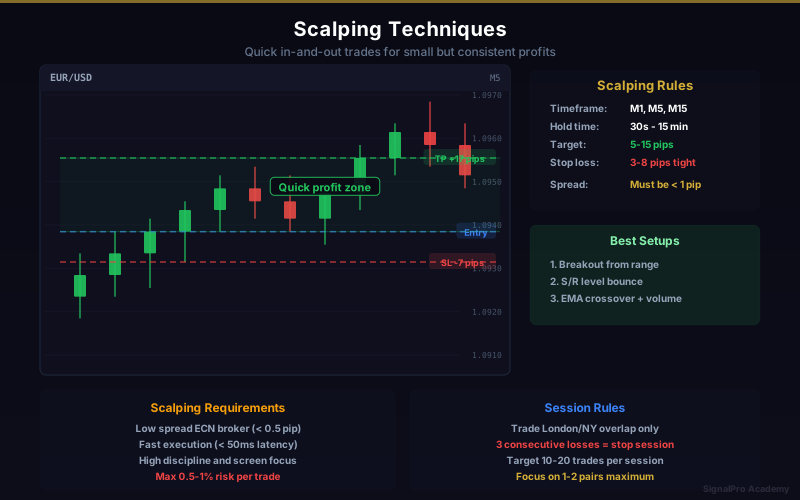
Scalping involves taking many small profits throughout the day. It requires discipline, speed, and low spreads.
What is Scalping?
- Quick trades (seconds to minutes)
- Small pip targets (5-15 pips)
- High frequency (multiple per day)
- Requires active management
Requirements for Scalping
Broker Requirements
- Low spreads (crucial)
- Fast execution
- No re-quotes
- ECN/STP preferred
Personal Requirements
- Full attention
- Fast decision making
- Discipline to take profits
- Ability to accept small losses
Scalping Strategies
1. Moving Average Scalp
- Use 8 and 21 EMA on M5
- Trade pullbacks to MAs
- Enter on rejection candle
- Target: 10-15 pips
2. Support/Resistance Scalp
- Mark key levels on M15
- Drop to M1 for entries
- Trade bounces with confirmation
- Tight stops, quick profits
3. Breakout Scalp
- Trade range breaks on M5
- Enter on candle close beyond level
- Quick target: range width
- Trail aggressively
4. News Scalp (Advanced)
- Trade after major news
- Wait for initial spike to settle
- Enter on pullback
- Quick exit before reversal
Risk Management
Position Sizing
- Larger sizes than swing trading
- But still defined risk per trade
- Usually 0.5-1% risk per scalp
Stop Losses
- Tight stops (5-10 pips)
- Must be respected
- No "holding and hoping"
Profit Targets
- Take profits quickly
- Don't get greedy
- R:R of 1:1 to 1:2
Best Times to Scalp
- London open (first 2 hours)
- London-NY overlap
- After major news settles
- When volatility is high
Worst Times to Scalp
- Asian session (usually)
- Low liquidity periods
- Right before major news
- When spread widens
Scalping Mindset
- Accept many small wins and losses
- Focus on consistency over big wins
- Cut losses immediately
- Don't overtrade
- Take breaks regularly
Common Mistakes
- Holding losers too long
- Moving stops
- Trading during low volatility
- High spread pairs
- Overtrading after losses
Is Scalping Right for You?
Good for:
- Active traders
- Quick decision makers
- Those with time during sessions
- People who like action
Not for:
- Part-time traders
- Those who need to think
- People with slow execution
- Those with high spreads
Lesson Discussion