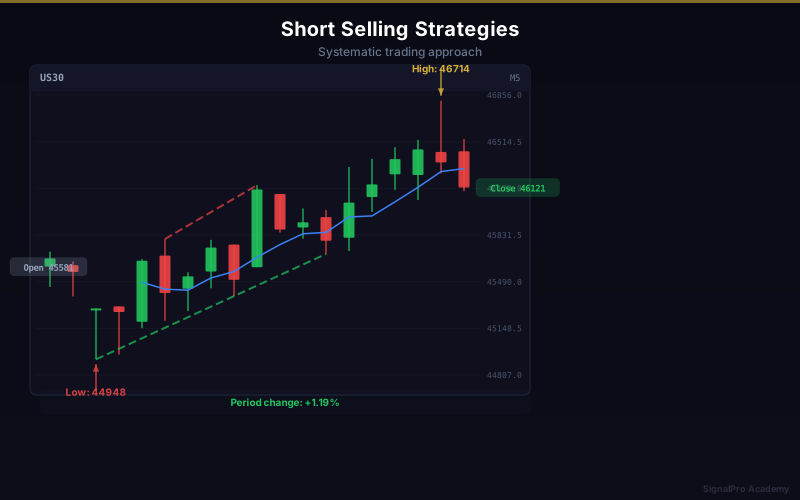
Short Selling Strategies
Short selling lets you profit when stocks decline, adding a powerful tool to your arsenal.
How Short Selling Works
The Process
- Borrow shares from broker
- Sell borrowed shares at current price
- Wait for price to decline
- Buy shares back at lower price
- Return shares, keep the difference
Example
- Short 100 shares at $50 = receive $5,000
- Stock drops to $40
- Buy back 100 shares = pay $4,000
- Profit: $1,000 (minus fees)
Why Short Sell?
Market Opportunities
- Bear markets and corrections
- Overvalued stocks
- Companies with deteriorating fundamentals
- Sector rotation out of weak areas
Portfolio Hedging
- Reduce long portfolio exposure
- Protect during uncertainty
- Market-neutral strategies
Finding Short Candidates
Fundamental Red Flags
- Declining revenue multiple quarters
- Negative cash flow
- Rising debt levels
- Insider selling heavily
- Accounting irregularities
Technical Signals
- Below 200-day moving average
- Lower highs pattern
- Breaking key support
- Increasing volume on declines
Risks of Short Selling
Unlimited Loss Potential
- Stock can rise indefinitely
- $50 stock can go to $500
- Must have strict stop losses
Short Squeeze
- Heavily shorted stocks can spike
- Shorts forced to cover
- Creates explosive upward moves
- Check short interest before shorting
Borrowing Costs
- Pay interest on borrowed shares
- Hard-to-borrow stocks expensive
- Costs eat into profits
Risk Management
- Always use stop losses
- Size shorts smaller than longs
- Avoid heavily shorted stocks
- Do not short strong uptrends
- Cover partials on the way down
- Maximum 2% risk per short position
Lesson Discussion