Volatility Trading Strategies
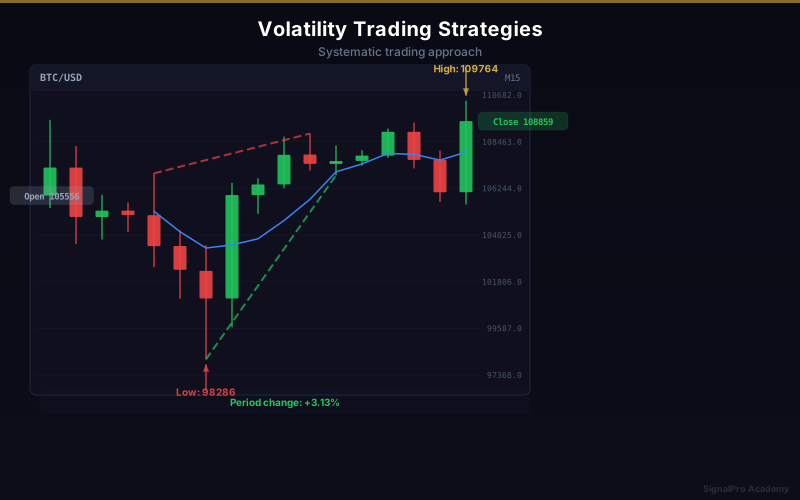
Volatility is the trader's friend. Learn to measure and trade it effectively.
Understanding Volatility
What is Volatility?
- Measure of price movement magnitude
- High volatility = larger price swings
- Low volatility = smaller price swings
- Volatility is cyclical
Volatility Indicators
- ATR (Average True Range): Measures pip movement
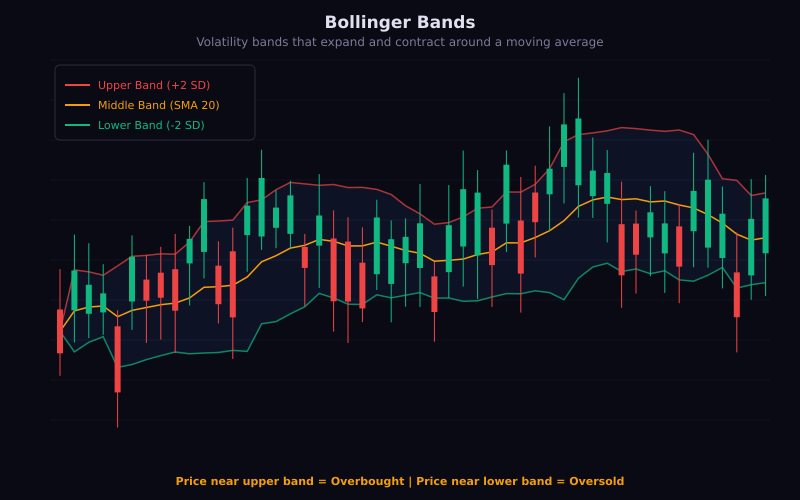
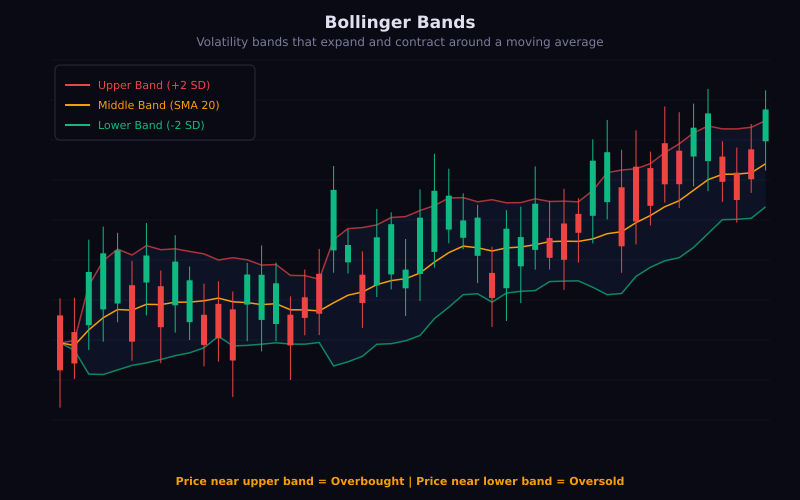
- Bollinger Bands: Price channels based on volatility
- VIX: Fear index for equities (apply concept to forex)
ATR-Based Trading
Stop Loss Sizing
- Use ATR multiples for stops
- 1.5-2x ATR from entry
- Adapts to current volatility
- Wider stops in high volatility
Position Sizing
- Adjust size based on ATR
- Larger ATR = smaller position
- Keep dollar risk consistent
- Formula: Risk $ / (ATR x Pip Value)
Bollinger Band Strategies
Bollinger Squeeze
- Bands narrow significantly
- Volatility compression
- Breakout imminent
- Trade the expansion
Band Bounce
- Price touches outer band
- Look for rejection
- Trade back to middle band
- Works in ranging markets
Band Walk
- Price rides upper/lower band
- Strong trend in progress
- Do not fade the trend
- Trail along the band
Volatility Breakout System
Setup
- Identify low volatility period (narrow range)
- Mark the range boundaries
- Wait for breakout with volume
- Enter in breakout direction
- Stop inside the range
Best Times for Breakouts
- London open (Asian range breaks)
- After consolidation periods
- Post-news settling
Risk Considerations
- Wider stops in high volatility
- Reduce size accordingly
- Volatility can spike unexpectedly
- Always have stops in place
Lesson Discussion