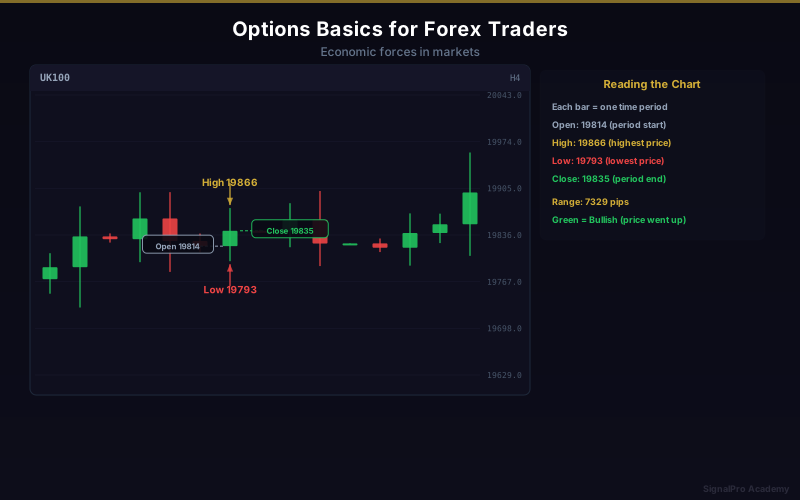
Options Basics for Forex Traders
Even if you never trade options directly, understanding options data gives you a significant edge in forex trading through sentiment, positioning, and key level identification.
Options Fundamentals
What Are Options?
- A contract giving the RIGHT but not obligation to buy/sell
- Call Option: Right to buy at a specific price (strike)
- Put Option: Right to sell at a specific price
- Premium: The cost of the option contract
- Expiration: Date when the option expires
Key Terms
- Strike Price: The agreed-upon price for the trade
- In-the-Money (ITM): Option has intrinsic value
- Out-of-the-Money (OTM): Option only has time value
- At-the-Money (ATM): Strike equals current price
- Implied Volatility (IV): Expected future volatility
The Options Greeks
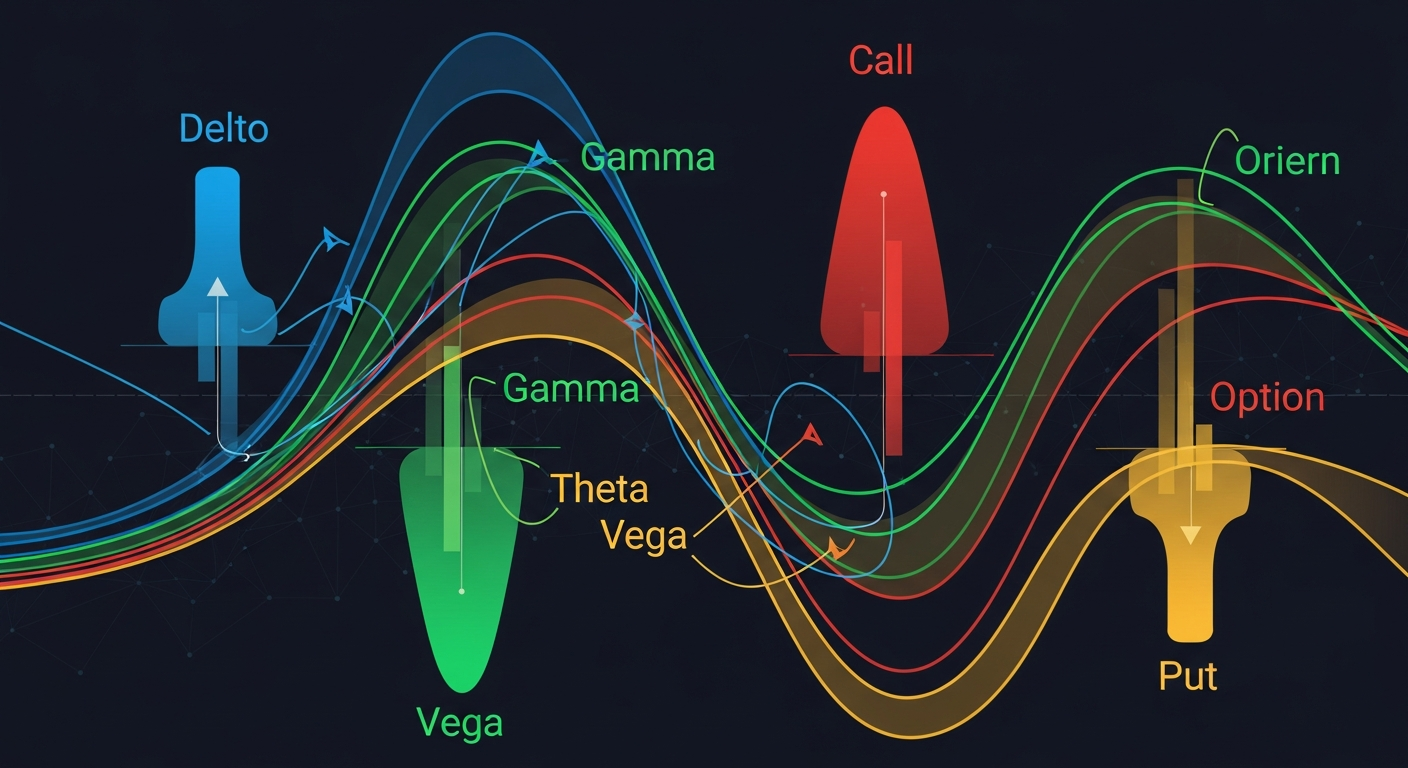
Delta
- How much option price changes for each unit of underlying move
- Call delta: 0 to 1 (positive, moves with underlying)
- Put delta: 0 to -1 (negative, moves against underlying)
- ATM options have ~0.50 delta
- Used by dealers for hedging (creates market impact)
Gamma
- Rate of change of delta
- Highest for ATM options near expiration
- Gamma exposure causes dealer hedging flows
- Positive gamma: Dealers hedge in your favor
- Negative gamma: Dealers hedge against you (amplifies moves)
Theta
- Time decay of option value
- Options lose value every day
- Accelerates near expiration
- Options sellers benefit from theta decay
Vega
- Sensitivity to changes in implied volatility
- High vega = option price very sensitive to volatility
- Important before events (NFP, FOMC, elections)
How Options Data Helps Forex Trading
Option Barriers and Strikes
- Large option strikes act as magnets for price
- Price tends to gravitate toward largest strikes near expiry
- Barrier options at round numbers create defense
- Banks defend their option positions by trading spot
Implied Volatility Signals
- Rising IV = market expects big move coming
- Falling IV = market expects calm, range-bound
- IV before events tells you expected move size
- Compare IV to actual volatility for trading ideas
Risk Reversals
- Difference between call and put implied volatility
- Positive risk reversal = market bullish (calls more expensive)
- Negative risk reversal = market bearish (puts more expensive)
- Extreme readings = strong directional bias
Practical Applications
Option Expiry Trading
- Identify largest option expiries for the day
- Price often gravitates toward these levels
- After expiry, the magnet effect disappears
- Price is then free to move directionally
- Trade the directional move after 10am ET expiry
Volatility Crush Trading
- Before major news: IV is high
- After news: IV crashes (volatility crush)
- Range-bound moves into event = building IV
- Breakout after event = IV release
- Helps time entries around news events
Gamma Exposure Analysis
- Track dealer gamma exposure at key levels
- Positive gamma zones: Price tends to revert (ranging)
- Negative gamma zones: Price tends to trend (volatile)
- Flip from positive to negative gamma = potential breakout
Where to Find Options Data
Free Sources
- CME Group website (FX futures options)
- Daily option expiry reports from news services
- Economic calendars listing option expiries
- Risk reversal data from financial data providers
Paid Sources
- Bloomberg terminal options analytics
- Refinitiv Eikon options data
- Specialized options flow services
- Institutional research reports
Key Takeaways
- Option strikes act as magnets for spot price near expiry
- Implied volatility tells you how big the market expects moves
- Risk reversals reveal market directional bias
- Dealer hedging (gamma) can amplify or dampen moves
- You do not need to trade options to benefit from options data
Lesson Discussion