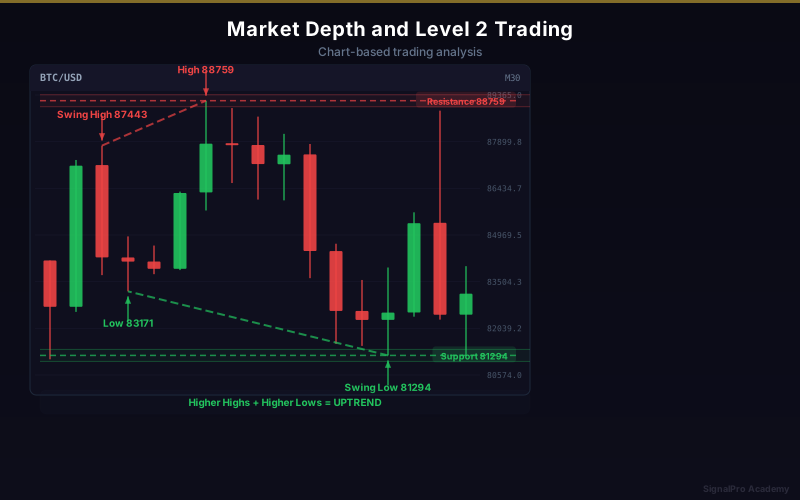
Market Depth and Level 2 Trading
Level 2 data shows you the actual orders waiting in the market at different price levels. Reading this data reveals what institutional traders are doing BEFORE price moves.
Understanding the Order Book
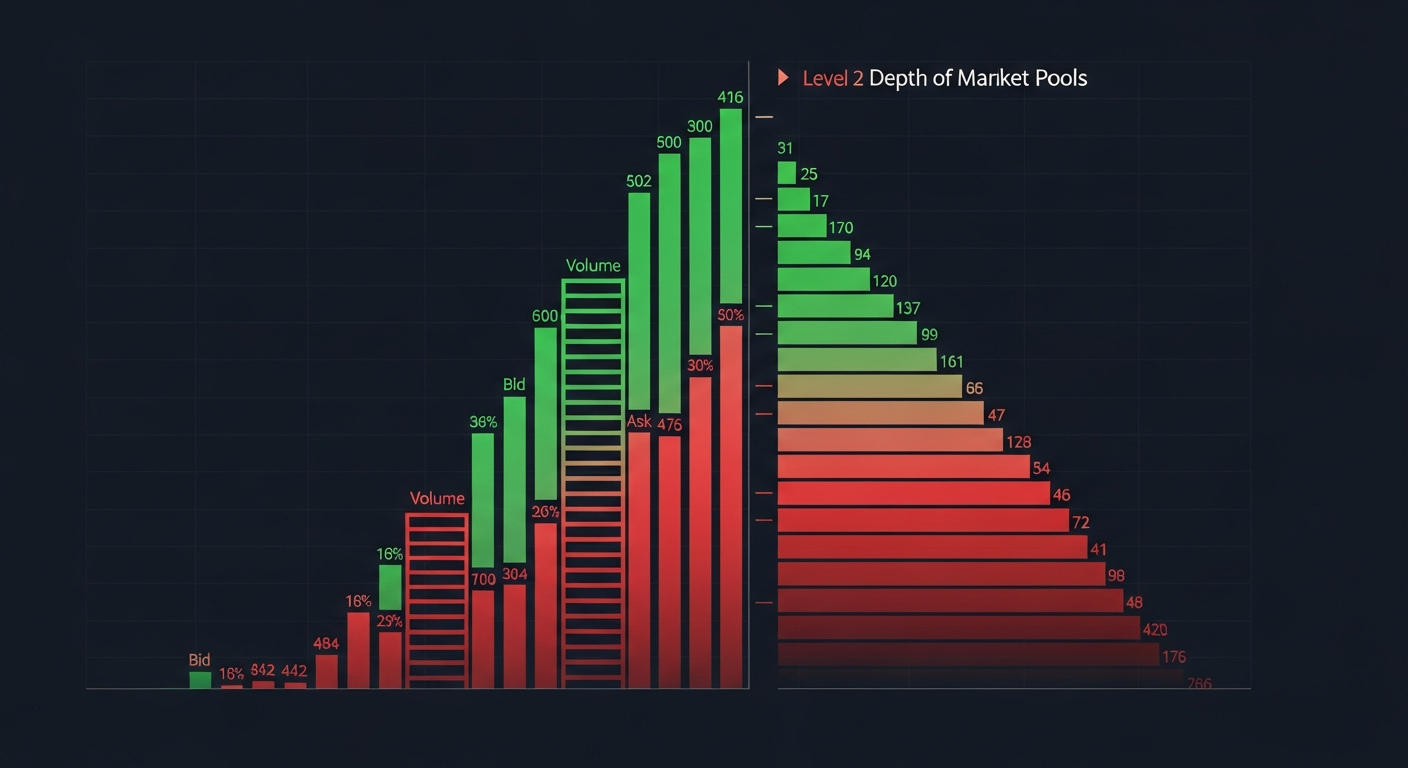
Bid Side (Buyers)
- Shows all pending buy orders and their sizes
- Ranked from highest price (best bid) downward
- Represents demand at each price level
- Large bids = strong buying interest at that level
Ask Side (Sellers)
- Shows all pending sell orders and their sizes
- Ranked from lowest price (best ask) upward
- Represents supply at each price level
- Large asks = strong selling interest at that level
The Spread
- Gap between best bid and best ask
- Tight spread = liquid market, easy to trade
- Wide spread = illiquid, higher trading costs
- Spread widens during news and off-hours
Reading Market Depth
Order Size Analysis
- Normal orders: 1-10 lots (retail traders)
- Medium orders: 10-50 lots (small funds)
- Large orders: 50-200 lots (institutional)
- Massive orders: 200+ lots (market makers, banks)
Identifying Support
- Large cluster of buy orders at a price level
- Creates a wall that price has difficulty passing through
- If the wall holds, price bounces up
- If the wall is absorbed (eaten through), bearish signal
Identifying Resistance
- Large cluster of sell orders at a price level
- Creates ceiling that price struggles to break
- If the wall holds, price drops back
- If the wall is absorbed, bullish breakout signal
Order Flow Concepts
Absorption
- Large resting order absorbs aggressive orders
- Price stays at a level despite heavy selling/buying
- Indicates a strong institutional presence
- Often precedes reversal in direction of absorber
Spoofing (Be Aware)
- Large orders placed then quickly cancelled
- Designed to trick other traders
- Creates false impression of support/resistance
- Illegal but still occurs, especially in crypto
Iceberg Orders
- Large orders hidden behind small visible size
- Only shows 10% of total order size
- As visible part fills, more appears
- Indicates institutional activity at that level
Trading Strategies
Support/Resistance from Order Book
- Identify levels with unusually large orders
- Watch if these orders hold or get pulled
- If they hold and absorb selling: Buy near them
- If they get pulled: Level is fake, avoid
- If they get consumed: Strong breakout incoming
Tape Reading
- Watch the time and sales (trade tape)
- Monitor size and speed of executions
- Large aggressive buys at ask = bullish
- Large aggressive sells at bid = bearish
- Increasing speed of execution = momentum building
Order Book Imbalance
- Compare total bid volume vs ask volume
- 2:1 bid:ask ratio = strong buying pressure
- 1:2 bid:ask ratio = strong selling pressure
- Extreme imbalances often precede moves
- Use as confirmation with other technical signals
Forex-Specific Considerations
Decentralized Market
- Forex has no central order book
- Each broker shows their own liquidity
- Level 2 in forex shows your broker ECN depth
- Less reliable than centralized exchanges (stocks, futures)
Where It Works Best
- Futures markets (CME forex futures)
- Stock markets (NYSE, NASDAQ)
- Crypto exchanges (centralized ones)
- Less useful on retail forex platforms
Practical Tips
What to Focus On
- Look for large orders that stay (institutional, not spoofing)
- Watch absorption (large orders eating aggressive flow)
- Note levels where orders cluster consistently
- Monitor changes in order book before key levels
Time Context
- Order book changes rapidly during news
- Most stable during normal trading hours
- Pre-market shows overnight institutional positioning
- Last hour of session shows end-of-day adjustment
Key Takeaways
- Level 2 shows pending orders at each price level
- Large orders indicate institutional interest
- Absorption signals strong support/resistance
- Order book imbalance can predict short-term direction
- Use as confirmation tool, not sole trading signal
Lesson Discussion