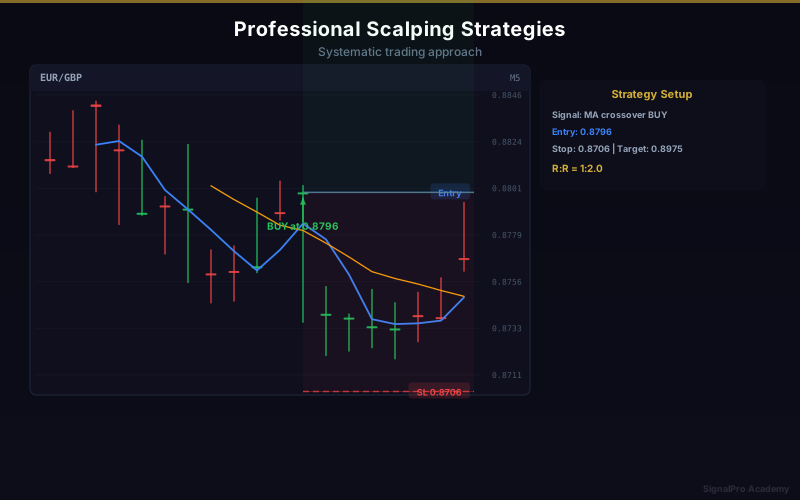
Professional Scalping Strategies
Scalping is the art of making many small, quick trades to accumulate profits throughout the day. It requires discipline, speed, and a clear methodology.
What is Scalping?
Definition
- Holding trades for seconds to minutes
- Targeting 5-20 pips or small point moves
- Taking 10-50+ trades per day
- Focus on high win rate with small gains
Requirements
- Low-spread broker (1 pip or less on majors)
- Fast execution platform
- Stable internet connection
- Discipline to cut losses immediately
- Ability to focus for extended periods
Scalping Strategies
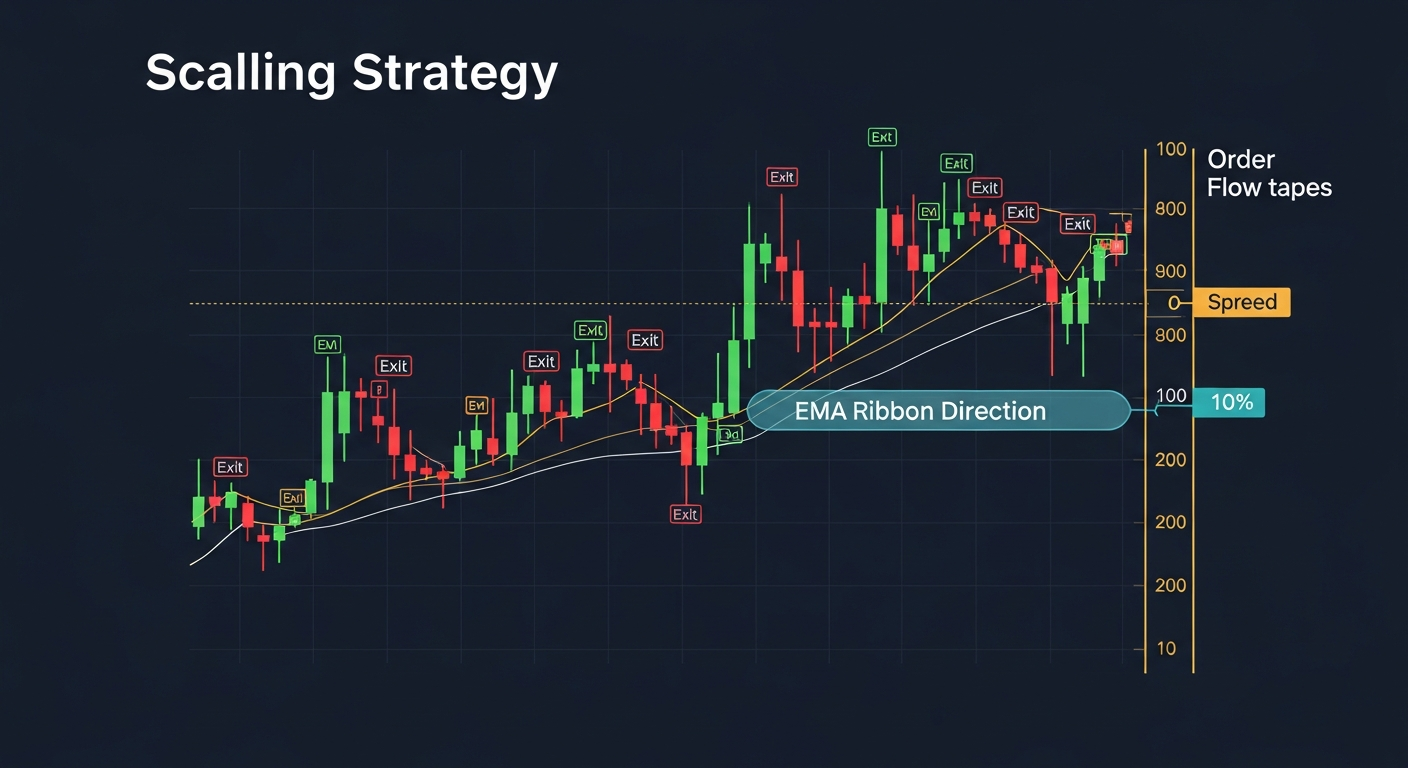
EMA Ribbon Scalping
- Apply 8, 13, 21, and 55 EMA to a 1-5 minute chart
- When all EMAs fan out upward in order = Bullish
- Enter long on a pullback to the 8 or 13 EMA
- Stop: Below the 21 EMA
- Target: 8-15 pips or the previous swing high
- Exit if EMAs compress or cross
Order Flow Scalping
- Watch Level 2 / Depth of Market (DOM)
- Identify large resting orders as support/resistance
- Enter when price approaches large order clusters
- Ride the bounce off the large order
- Exit quickly if the large order gets pulled
Range Breakout Scalping
- Identify a tight 15-30 minute consolidation range
- Place buy stop above and sell stop below the range
- When one triggers, cancel the other
- Target: Range height projected in the breakout direction
- Stop: Inside the range
VWAP Scalping
- Identify the trend relative to VWAP (above = buy, below = sell)
- Wait for a pullback to VWAP
- Enter in the trend direction on a 1-minute reversal candle
- Stop: 5 pips beyond VWAP
- Target: Previous extreme or 10-15 pips
Best Times to Scalp
High-Volume Sessions
- London Open: 3:00 - 5:00 AM EST
- NY Open: 8:30 - 11:00 AM EST
- London/NY Overlap: 8:00 - 12:00 PM EST
- Avoid Asian session (low volatility)
Best Pairs for Scalping
- EUR/USD: Tightest spreads
- GBP/USD: Good volatility, reasonable spreads
- USD/JPY: Clean price action
- Avoid exotic pairs (high spreads eat profits)
Risk Management for Scalping
Position Sizing
- Risk 0.25-0.5% per trade (smaller than swing trading)
- This allows for multiple losses without significant drawdown
- Larger position sizes compensate for smaller pip targets
The 3-Strike Rule
- If you lose 3 trades in a row, stop trading for 30 minutes
- Prevents revenge trading and emotional spirals
- Reassess market conditions before returning
Daily Loss Limit
- Set a maximum daily loss (1-2% of account)
- Stop immediately when hit, no exceptions
- This is non-negotiable for long-term survival
Spread Awareness
- A 2-pip spread on a 10-pip target means you need 12 pips of movement to reach your target
- Only scalp when spreads are at their tightest
- Check spreads before every session
Common Scalping Mistakes
- Overtrading in low-volatility conditions
- Moving stops further away hoping for a reversal
- Holding losers too long (a scalp that becomes a swing trade)
- Not accounting for spread in profit calculations
- Trading during news releases (spreads widen dramatically)
Key Takeaways
- Scalping requires the lowest spreads possible
- Trade only during high-volume sessions
- Keep risk per trade very small (0.25-0.5%)
- Cut losses immediately, never hold and hope
- The 3-strike rule and daily loss limit protect your capital
Lesson Discussion