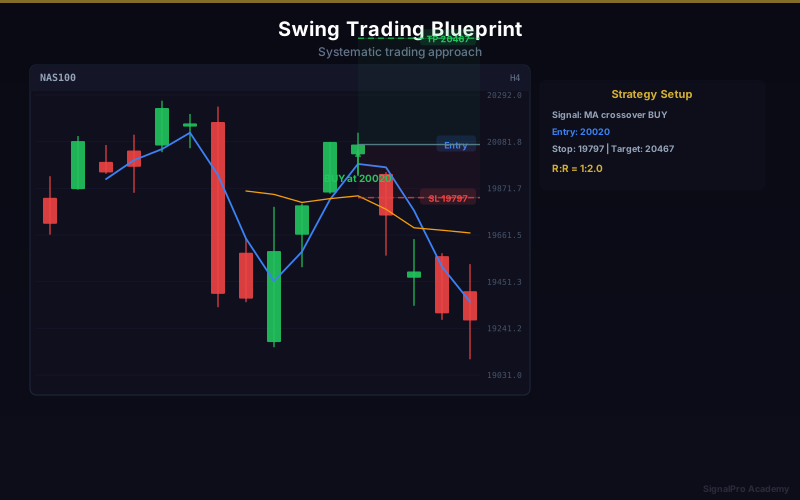
Swing Trading Blueprint
Swing trading targets moves lasting 2-10 days, making it ideal for traders who cannot watch charts all day. This framework covers everything from setup identification to trade management.
Why Swing Trading?
Advantages
- Works alongside a full-time job
- Less screen time than day trading
- Larger profit targets per trade
- Lower trading costs (fewer trades = fewer spreads)
- Better risk-to-reward ratios (wider stops but bigger targets)
Ideal For
- Forex, stocks, crypto, and commodities
- Traders who prefer daily and 4H chart analysis
- Those who want to avoid the stress of scalping
The Swing Trading Framework
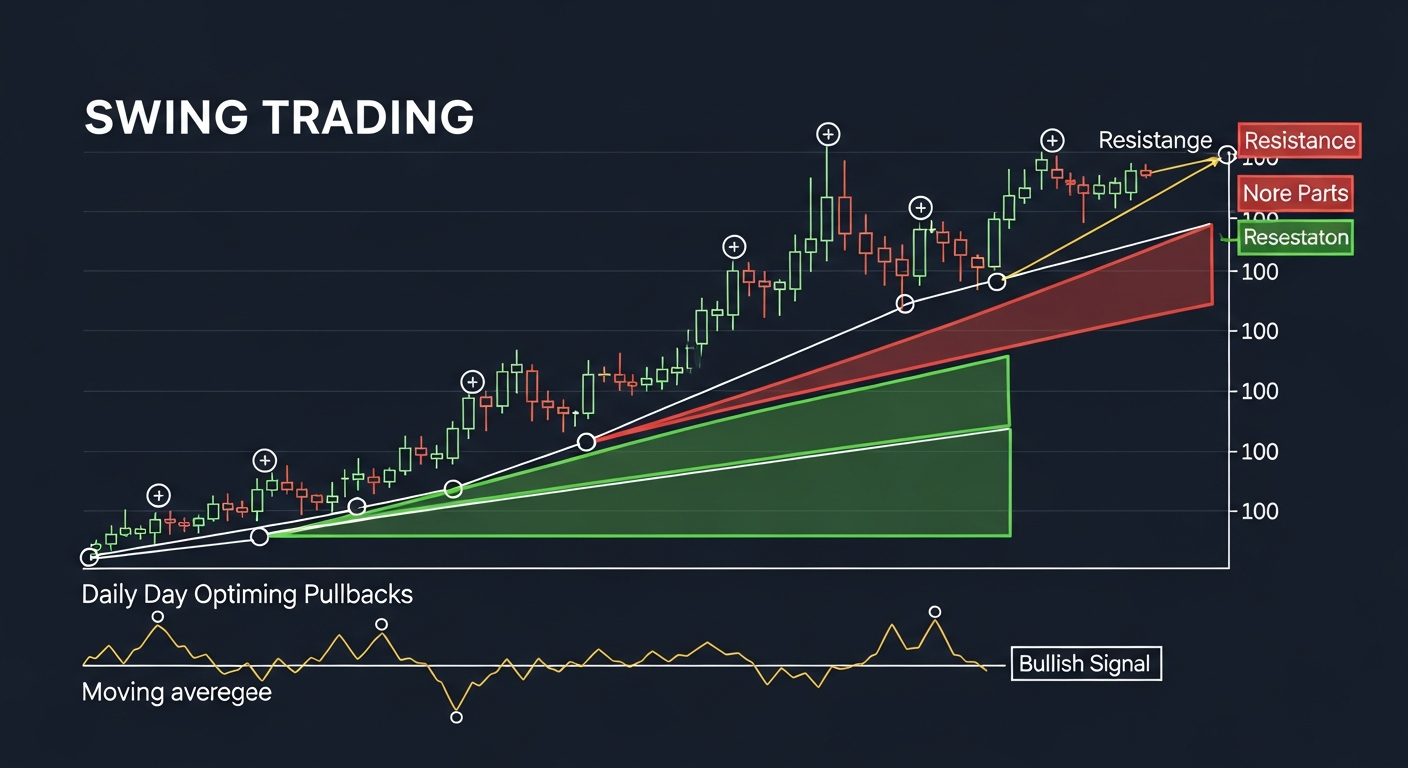
Step 1: Identify the Trend (Weekly Chart)
- Use the 50 EMA and 200 EMA
- Price above both = Uptrend (look for long setups only)
- Price below both = Downtrend (look for short setups only)
- Price between = Ranging (be selective or stand aside)
Step 2: Find the Setup (Daily Chart)
- Look for pullbacks to key support/resistance
- Fibonacci retracement to 38.2-61.8% zone
- Pullback to the 21 or 50 EMA
- Test of a previous breakout level
- Confluence of multiple support/resistance factors
Step 3: Time the Entry (4H Chart)
- Wait for a reversal candlestick pattern at the setup zone
- Bullish engulfing, hammer, or morning star for longs
- Bearish engulfing, shooting star, or evening star for shorts
- Volume increase on the reversal candle adds confidence
Step 4: Manage the Trade
- Stop loss: Below the setup swing low (longs) or above swing high (shorts)
- TP1: 1:1 risk-to-reward, move stop to breakeven
- TP2: 2:1 risk-to-reward, trail stop
- TP3: 3:1 or the next major level, let it run
Top Swing Trading Setups
Pullback to Support in Uptrend
- Trend is clearly up on the weekly
- Daily chart shows a pullback to a support zone
- 4H chart shows a reversal candle
- Enter with stop below the pullback low
- Target the previous high or higher
Breakout and Retest
- Price breaks above a key resistance level
- Price pulls back to retest the broken resistance (now support)
- Enter on the bounce with a reversal candle
- Stop below the retest low
- Target the measured move from the breakout
Double Bottom with Neckline Break
- Price forms a double bottom at support
- Neckline (peak between the two bottoms) is broken
- Enter on the neckline break or the pullback to neckline
- Stop below the double bottom
- Target the pattern measured move
Screening for Swing Setups
Daily Routine (20-30 minutes)
- Scan your watchlist for pairs/stocks near support/resistance
- Check if the weekly trend aligns with the setup direction
- Mark potential entry zones on the daily chart
- Set price alerts at your entry zones
- Wait for alerts to trigger before analyzing further
Weekly Routine (1 hour on weekends)
- Review all open trades
- Adjust stops and targets
- Scan for new weekly-level setups
- Update your watchlist
- Journal closed trades
Risk Management
Position Sizing
- Risk 1-2% per trade
- Account for overnight gap risk in stocks
- Reduce size before major news events
Correlation Management
- Do not have more than 3 correlated positions
- EUR/USD and GBP/USD often move together
- Total portfolio risk should not exceed 5%
Key Takeaways
- Swing trading fits a normal lifestyle, no need to quit your job
- Use multi-timeframe analysis: weekly for trend, daily for setup, 4H for entry
- Focus on pullbacks to support in uptrends and resistance in downtrends
- Always define your stop, targets, and position size before entering
- Review and journal every trade for continuous improvement
Lesson Discussion