Trade Management and Scaling
Getting into a trade is only half the battle. How you manage the trade, scale in/out, and protect profits separates professionals from amateurs.
Why Trade Management Matters
The Reality
- A good entry with bad management = losing trade
- A mediocre entry with great management = profitable
- Most education focuses on entries
- Professionals spend 80% of effort on management
Position Building (Scaling In)
What is Scaling In?
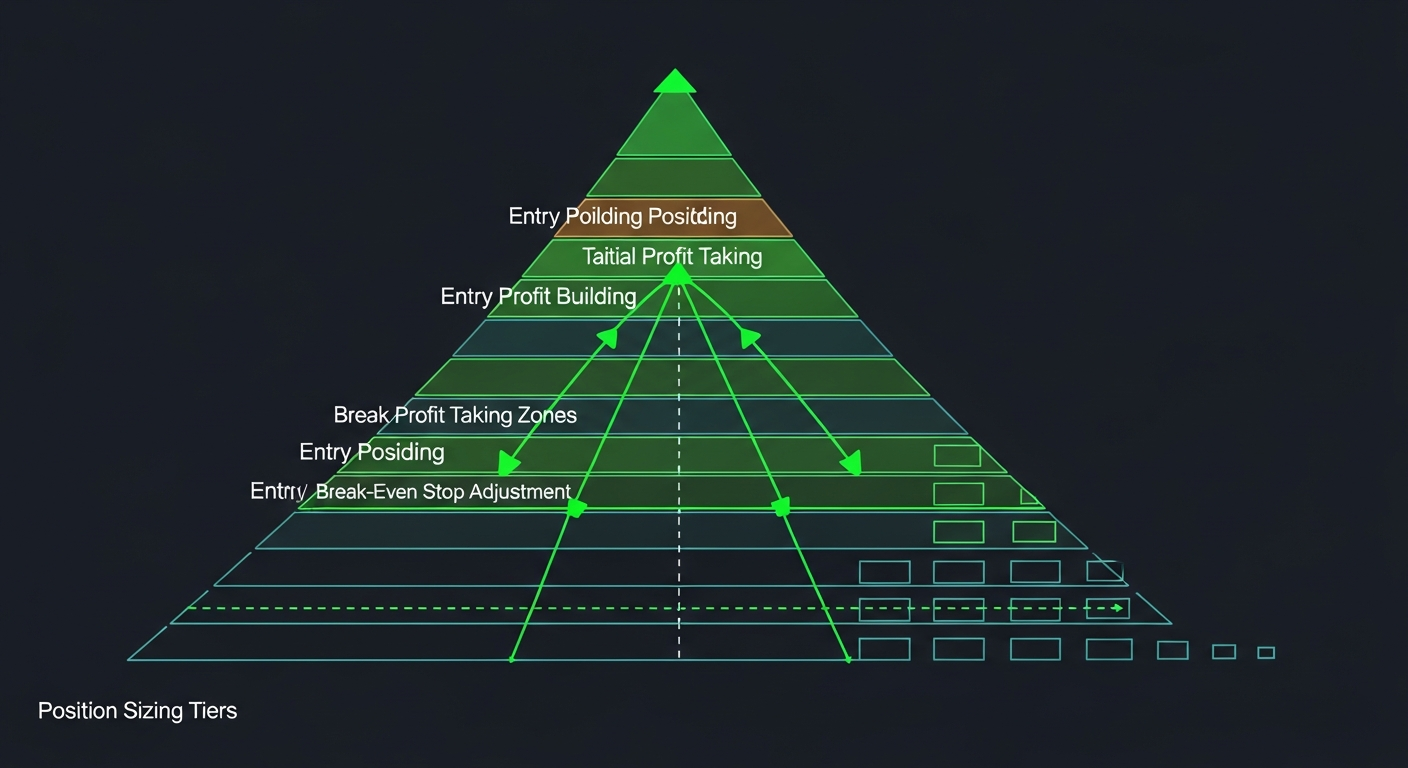
- Building your full position over multiple entries
- Instead of buying 3 lots at once, buy 1 lot three times
- Reduces risk if your initial analysis is wrong
- Allows you to average into a better price
Pyramid Strategy
- Enter with 50% of intended position size at first level
- Price moves in your favor to first target zone
- Add 30% more at confirmed support/resistance
- Add final 20% on further confirmation
- Average entry price is better, risk is lower
Scaling In Rules
- Only add to WINNING positions
- Never add to losing positions (averaging down kills accounts)
- Each new addition must have its own stop loss logic
- Total position risk should never exceed your maximum
Taking Profits (Scaling Out)
Why Scale Out?
- Locks in profits on part of the position
- Lets the remainder ride for bigger moves
- Reduces psychological pressure
- Guarantees some profit even if trade reverses
The 3-Part Exit Strategy
- Take 1/3 profit at 1:1 risk-reward
- Move stop to breakeven on remainder
- Take 1/3 at 1:2 risk-reward
- Trail stop on final 1/3 for maximum capture
- This turns every winner into stress-free trading
Fixed Target Exits
- Set specific price targets before entering
- Based on support/resistance, Fibonacci extensions
- Take profit at each level
- Simple and removes emotion
Stop Loss Management
Initial Stop Placement
- Beyond the nearest structure level
- Below the last swing low (for longs)
- Beyond the entry signal invalidation point
- Wide enough to give the trade room
- Tight enough to limit risk to 1-2%
Moving Stop to Breakeven
- After taking first partial profit
- When price has moved 1:1 in your favor
- This makes the remaining position risk-free
- Never move to breakeven too early (price needs room)
Trailing Stop Methods
- Fixed pip trail: Move stop X pips behind price
- Structure trail: Move stop below each new swing low
- Moving average trail: Use 20 EMA as trailing stop
- ATR trail: Trail by 2x ATR behind price
- Chandelier exit: Trail from highest high by ATR multiple
Advanced Management Techniques
Time-Based Management
- If trade has not moved in your favor after X hours/days
- Consider closing at breakeven or small loss
- Time is a cost (your capital is tied up)
- Set maximum holding period for each trade type
Hedging Open Positions
- If you cannot close due to market conditions
- Open a smaller opposing position to reduce exposure
- Close the hedge when risk passes
- Not ideal but useful during high-impact news
Partial Reversal
- Your long position hits resistance
- Instead of full exit, reduce to half
- If resistance breaks, add back
- If it reverses, you reduced your exposure early
The Mental Game
Letting Winners Run
- Hardest part of trading is holding winners
- We want to lock in profit immediately
- Solution: Scale out so you always have some profit secured
- Then let runners ride with a trailing stop
Cutting Losers
- Easy to say, hard to do
- If the reason you entered no longer exists, exit
- Do not wait for your stop loss if the thesis is broken
- A small loss today prevents a big loss tomorrow
Key Takeaways
- Trade management matters more than entry
- Scale in to winning positions, never to losers
- Scale out in portions to secure profits and let runners ride
- Move stops to breakeven after first partial profit
- Have a written management plan BEFORE entering every trade
Lesson Discussion