Triple Top and Bottom Patterns
Triple tops and bottoms are among the most reliable reversal patterns in technical analysis.
Triple Top Pattern
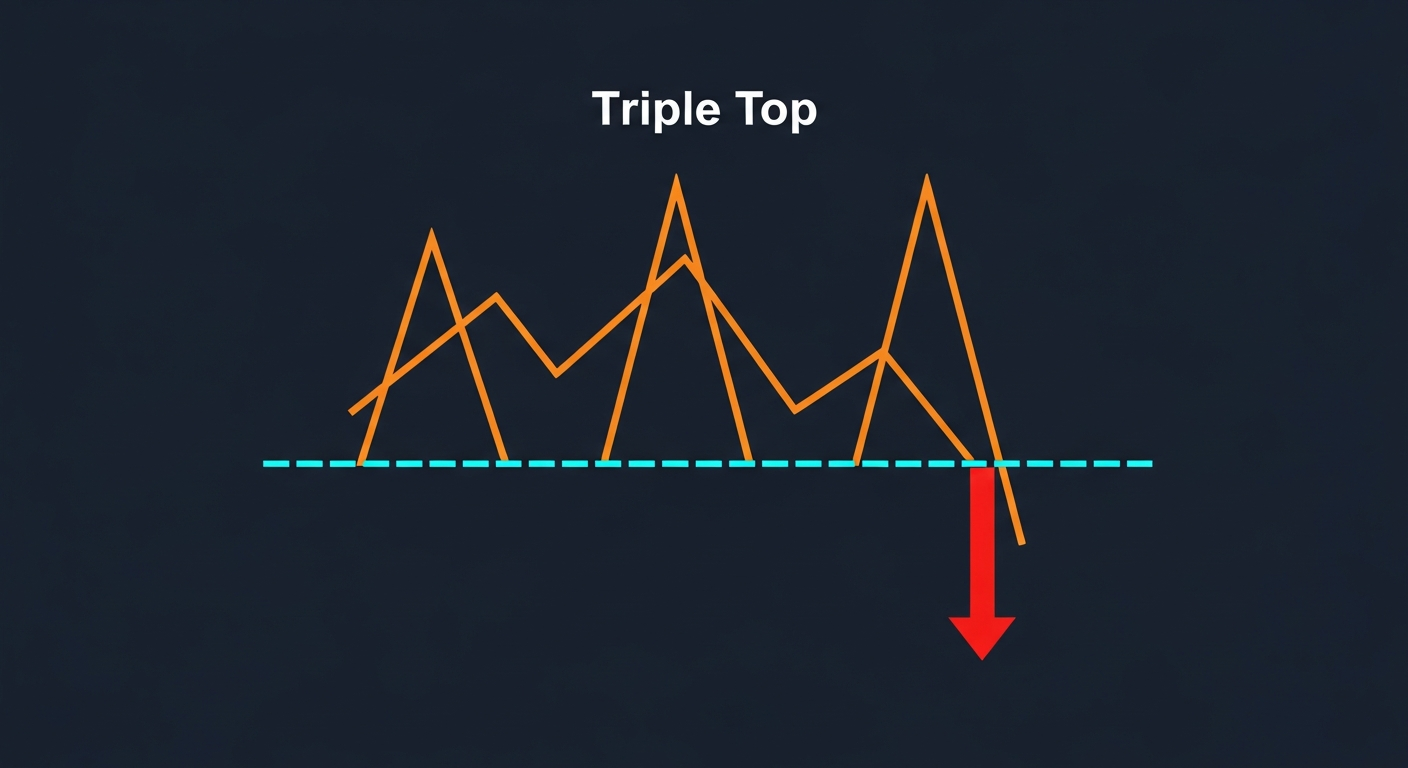
Formation
- Three peaks at approximately the same price level
- Two troughs between the peaks form the neckline
- Each peak tests resistance and fails
- Volume typically decreases on each successive peak
Confirmation
- Price breaks below neckline support
- Volume increases on breakdown
- Retest of neckline from below confirms
Trading Rules
- Entry: On break below neckline
- Stop loss: Above the highest peak
- Target: Distance from peaks to neckline, projected downward
- Risk to reward typically 1:2 or better
Triple Bottom Pattern
Formation
- Three troughs at approximately the same price level
- Two peaks between form the neckline resistance
- Each trough tests support and holds
- Volume often increases on third bounce
Confirmation
- Price breaks above neckline resistance
- Volume surge on breakout
- Retest of neckline from above confirms
Trading Rules
- Entry: On break above neckline
- Stop loss: Below the lowest trough
- Target: Distance from troughs to neckline, projected upward
Triple vs Double
Why Triples Are Stronger
- More tests of level = stronger reversal
- Institutional accumulation or distribution
- Retail traders give up after two failures
- Smart money enters on the third test
Practical Tips
- Peaks and troughs do not need to be exact same price
- Allow 1-2% variation in level
- Pattern takes weeks to months to form
- Higher timeframe triples are more reliable
- Always wait for neckline break confirmation
Lesson Discussion